The Green Urban Living Lab Arnhem provides a innovative, cooperative learning and co-creating enviroment, in which multiple stakeholders jointly test, develop and create green metropolitan solutions.
Green Urban Living Lab Arnhem
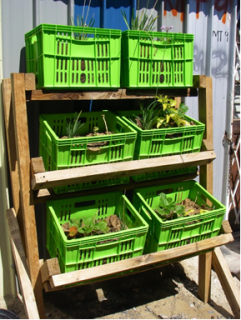
The Green Urban Living Lab Arnhem provides a innovative, cooperative learning and co-creating enviroment, in which multiple stakeholders jointly test, develop and create green metropolitan solutions.
Get notified about new updates, opportunities or events that match your interests.

In de ruimte is steeds meer technologie te vinden: satellieten voor mobiel netwerk, voor weer- en klimaatmetingen en voor oorlogsvoering. Hoeveel voller kan het daarboven worden en wat hebben we daar eigenlijk over te zeggen? Op donderdag 2 oktober gaan we in gesprek met kunstenaar Michele Boulogne en antropologe Danick Trouwloon over technologie in de ruimte en de invloed daarvan op onze perceptie van de aarde.
> Hoe zien wij de aarde vanuit de ruimte? Van een afstand lijkt het een rustgevende blauwe bol. Maar in werkelijkheid staat de wereld in de fik.
De van oorsprong Frans-Caribische kunstenaar Michèle Boulogne onderzoekt hoe klimaatverandering begrepen kan – en moet – worden door de ogen van lokale gemeenschappen. De Nederlands-Caribische onderzoeker Danick Trouwloon onderzoekt ecologisch beheer en klimaatverandering in relatie tot de bevolking op de verschillende eilanden. Tijdens Waag Open gaan zij met Waag’s Miha Tursic in gesprek over wat de ruimte betekent voor verschillende culturen, ons beeld van de aarde en het klimaat, en hoe technologie én wijzelf daar invloed op hebben.
Kom op donderdag 2 oktober naar Waag Open en laat ons weten hoe jij de aarde ziet!
| 19:30 - 19:45 uur | Welkom & introductie |
|---|---|
| 19:45 - 21:15 uur | Interactief gesprek met Michele Boulogne, Danick Trouwloon en Miha Tursic |
| 21:15 - 21:30 uur | Napraten & borrel |
Elke eerste donderdagavond van de maand opent Waag haar deuren! Kom langs om te discussiëren en te doen. Want we gaan niet alleen in discussie over maatschappelijke thema's en de toekomst – je leert daarnaast ook altijd iets praktisch. Iets dat je altijd al hebt willen uitproberen, zoals de 3D-printer in het FabLab, of juist iets dat je nooit had verwacht, zoals uitpluizen hoe DNA in elkaar zit in ons biotech-lab. Waag Open vindt plaats in de maakplaatsen op de eerste en tweede verdieping van het historische Waaggebouw op de Nieuwmarkt.
Mocht je krap bij kas zitten en wel graag aan dit evenement willen deelnemen, neem dan contact op met sanna [@] waag [punt] org.
Het programma is een resultaat van het More-than-planet project en is mede mogelijk dankzij het 3Package Deal programma van het AFK dat Michele Boulogne’s werk ondersteunt.

Everything Urban 001 (LinkedIn Event) is the first in the Interactive Talk series for students and young professionals interested in Urban Affairs i.e. urban planning, urban management, architecture, sustainability, smart cities, to name some. Feel Free to attend it on September 4, 2025. More details in the link.

As the world grapples with massive challenges—climate change, rapid urbanisation, digital disruption, and growing inequality—some cities are not waiting for top-down solutions. They are rolling up their sleeves and experimenting with new ways to improve life for everyone, block by block. Amsterdam is one of those cities.
That’s why I was proud to share Amsterdam InChanges approach to smart, inclusive urban innovation at the #CIPPCD2025 conference in Aveiro.
Through our open innovation platform, <strong>Amsterdam InChange</strong>, the city has become a global leader in turning lofty global ambitions into practical, local action. But Amsterdam’s model isn’t built around flashy tech or utopian blueprints. Instead, it’s grounded in an essential question: How can we use innovation to improve people’s everyday lives?
Local Action for Global Challenges
Amsterdam understands that the climate crisis, digital transition, and social inequality can’t be solved by government alone—or by technology alone. That’s why it launched Amsterdam Smart City in 2009 as a public-private partnership. What began as small-scale energy-saving pilots has grown into a community of over 8,500 members, coordinating more than 300 projects across the city and beyond.
The approach is rooted in co-creation. Citizens, companies, knowledge institutions, and government actors come together to design, test, and scale solutions that serve the public good. The values that guide the network are clear: people first, openness, transparency, learning by doing, and public value.
The Doughnut as a Compass
Amsterdam was the first city in the world to embrace Doughnut Economics as a guiding framework. The “City Doughnut,” developed with economist Kate Raworth, helps policymakers balance the city’s ecological footprint with the social foundations that all citizens need: housing, education, health, equity, and more. It’s a tool to align every local decision with both planetary boundaries and human dignity.
This framework has inspired circular construction strategies, neighbourhood energy co-ops, and more inclusive procurement policies. It shows that global concepts can become real when grounded in local practice.
Making Innovation Inclusive
One of Amsterdam’s core beliefs is that smart cities must be <strong>inclusive cities</strong>. That means tackling issues like <strong>mobility poverty</strong>, where rising transport costs and digital-only services make it harder for low-income or elderly residents to get around.
Through the <strong>Mobility Poverty Challenge</strong>, Amsterdam partnered with the Province of North Holland and researchers from DRIFT to understand where and how exclusion occurs—and to design better public mobility systems. Pilot ideas like a “Mobility Wallet” (a subsidy for essential travel) and more inclusive digital apps emerged from real conversations with affected residents.
The same inclusive mindset guides Amsterdam’s digital transformation. In the suburb of Haarlemmermeer, officials flipped the script on e-government. Instead of asking citizens to become “digitally skilled,” they asked how government systems could become more <strong>humane</strong>. This led to simplified interfaces, better access to services, and ultimately more trust.
Responsible Tech and Energy from the Ground Up
Tech transparency is another pillar of the Amsterdam model. The city runs the world’s first <strong>Algorithm Register</strong>, giving the public insight into how AI and automated systems are used in services—from traffic enforcement to housing applications. Anyone can access this register, offer feedback, and better understand how digital decisions are made.
In the energy space, the city supports both bold innovation and careful upscaling. At the <strong>Johan Cruijff ArenA</strong>, used electric vehicle batteries store solar energy, powering concerts and matches with clean backup power. At the same time, a coalition of partners led by Amsterdam InChange is working to scale up Local Energy Systems by collecting lessons learned and creating a toolkit for community-led energy.
What Makes It Work?
If there’s one secret to Amsterdam’s success, it’s the governance model: small, neutral facilitation teams guiding large multi-stakeholder coalitions, anchored by public trust and shared purpose. Regular Demo Days allow project teams to showcase progress, get feedback, and adapt. This culture of transparency and iteration helps avoid the so-called “innovation graveyard,” where pilot projects go to die.
The city also embraces failure—as long as it’s shared and learned from. Reports like “Organising Smart City Projects” openly list lessons, from the importance of strong leadership to the need for viable business models and continuous user involvement.
An Invitation to Other Cities
Amsterdam’s smart city is not a blueprint—it’s a mindset. Start with your biggest local challenge. Bring the right people together. Make space for experimentation. Build bridges between local and global. And, above all, put citizens at the centre.
As international smart city ambassador Frans-Anton Vermast puts it: “We’re not just creating technology for cities—we’re creating better cities for people.”
The III International Conference on Public Policies and Data Science