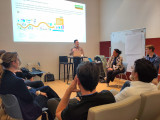
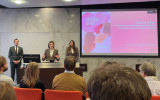
Op 23 augustus organiseert de Werkgroep Slimme Energie Systemen in samenwerking met Hiemstra & de Vries weer een digitale community sessie op het thema slimme energiesystemen van 15:30 tot 17:00. Dit keer geeft Naut Loots, van de gemeente Amsterdam, een presentatie over de aanpak op (slimme) energie-infrastructuur van de gemeente. In Amsterdam sturen ze gericht op het toekomstbestendig maken van de energie-infrastructuur aan de hand van een uitgebreide systeemstudie die is uitgevoerd. Wat levert zo’n studie op en waarom is het een belangrijk instrument om te sturen? Naut vertelt ook hoe de gemeente Amsterdam bedrijven ondersteunt, die op de wachtlijst staan voor een aansluiting of uitbreiding. Het liefst met een collectieve oplossing. Er is ruim de tijd voor vragen over de aanpak van Amsterdam.
Daarnaast is er in het programma ook tijd om vragen aan elkaar te stellen. Wil je ergens hulp bij of wil je over een onderwerp sparren met de community? Breng het vooral in. Je kunt ons vooraf mailen, of ter plekke je vraag inbrengen.
Je kunt je aanmelden door een link te sturen naar: cato.bechtold@hiemstraendevries.nl
We hopen je digitaal te zien op de 23e!
Want to receive updates like this in your inbox?
Get notified about new updates, opportunities or events that match your interests.
Maybe you will also like these updates
Cenex Webinar #2 - EV Chargers: How to know where to place them?

Join us for an exclusive webinar featuring three leading European cities sharing their proven strategies for EV charging infrastructure placement. Learn from real-world experiences and discover data-driven approaches that are transforming urban mobility across Europe.
𝗪𝗵𝗮𝘁 𝗬𝗼𝘂'𝗹𝗹 𝗟𝗲𝗮𝗿𝗻
🏙️ 𝗦𝘁𝗿𝗮𝘁𝗲𝗴𝗶𝗰 𝗣𝗹𝗮𝗰𝗲𝗺𝗲𝗻𝘁 𝗔𝗽𝗽𝗿𝗼𝗮𝗰𝗵𝗲𝘀 - Discover how Brighton & Hove, Oslo, and Metropolitan Region of Amsterdam Electric have developed their EV charging strategies
📊 𝗗𝗮𝘁𝗮-𝗗𝗿𝗶𝘃𝗲𝗻 𝗗𝗲𝗰𝗶𝘀𝗶𝗼𝗻 𝗠𝗮𝗸𝗶𝗻𝗴 - Learn about the tools and methodologies these cities use to optimize charging point locations
🚗 𝗦𝗲𝗿𝘃𝗶𝗻𝗴 𝗔𝗹𝗹 𝗥𝗲𝘀𝗶𝗱𝗲𝗻𝘁𝘀 - Understand how to address the needs of residents without private parking spaces
🌍 𝗜𝗻𝘁𝗲𝗿𝗻𝗮𝘁𝗶𝗼𝗻𝗮𝗹 𝗕𝗲𝘀𝘁 𝗣𝗿𝗮𝗰𝘁𝗶𝗰𝗲𝘀 - Gain insights from three different countries and municipal perspectives
💡 𝗟𝗲𝘀𝘀𝗼𝗻𝘀 𝗟𝗲𝗮𝗿𝗻𝗲𝗱 - Avoid common pitfalls and learn from real implementation experiences
𝗙𝗲𝗮𝘁𝘂𝗿𝗲𝗱 𝗦𝗽𝗲𝗮𝗸𝗲𝗿𝘀
Kieran Fitsall - Brighton & Hove Council
Sture Portvik & Sara Teige Kalsaas - City of Oslo
Annekee de Jager - MRA-e (Amsterdam Metropolitan Region)
Hosted by Sanne van Breukelen - Cenex Nederland
𝗪𝗵𝘆 𝗔𝘁𝘁𝗲𝗻𝗱?
With Europe requiring 6.8 million public charging points by 2030, municipalities face unprecedented challenges in planning and implementing EV infrastructure. This webinar brings together three cities that have successfully navigated these challenges, offering practical insights for:
- Municipal planning departments
- Urban mobility professionals
- EV infrastructure developers
- Policy makers and city officials
- Transport consultants
𝗞𝗲𝘆 𝗧𝗼𝗽𝗶𝗰𝘀 𝗖𝗼𝘃𝗲𝗿𝗲𝗱
- Historical approaches vs. modern data-driven strategies
- Stakeholder engagement
- Grid capacity considerations and smart charging integration
- On-street charging solutions for urban residents
𝗪𝗵𝗼 𝗦𝗵𝗼𝘂𝗹𝗱 𝗔𝘁𝘁𝗲𝗻𝗱
This webinar is essential for anyone involved in:
- Urban planning and development
- Sustainable transport initiatives
- EV infrastructure deployment
- Municipal policy development
- European mobility strategy
𝗥𝗲𝗴𝗶𝘀𝘁𝗿𝗮𝘁𝗶𝗼𝗻
Don't miss this opportunity to learn from Europe's leading cities in EV infrastructure planning. Register now to secure your spot and gain access to exclusive insights that could transform your city's approach to EV charging.
---
This webinar is part of Cenex's ongoing commitment to accelerating the transition to sustainable transport through knowledge sharing and best practice dissemination across European cities.
Demoday #28: How to keep our mechanics on the move?

On the 5th of July, during Demoday #28, we zoomed in on one of the pressing challenges facing the energy transition: grid congestion, and more specifically, how to keep the people who maintain the grid moving efficiently.
Grid congestion is a serious and growing concern for grid operator Alliander. It is therefore essential to speed up the grid reinforcement as much as possible. Alliander’s Operation 2.0 team is exploring innovative ways to work smarter, faster, and more flexibly to keep pace with these developments.
Their efforts focus on three tracks:
• Alleviating staff shortages by training office employees to occasionally support fieldwork.
• Exploring technologies like advanced ground radar to get better insights into underground assets.
• Improving the logistics of supplying mechanics to ensure they have the right tools, in the right place, at the right time.
This last track was the main focus of our work session.
Inefficient supply of mechanics
Logistics experiences show that mechanics collect materials inefficiently when supplying their vans and jobs, resulting in stock corrections, less control over stock, unnecessary work for logistics staff, and valuable mechanic hours being lost, which leads to less execution work. A few key problems stood out:
• Supplies are scanned inconsistently, so the system doesn’t reflect what is actually in stock.
• Every van is different, with a custom layout that suits the preferences of its mechanic.
• The work itself is unpredictable, which makes standardised restocking difficult.
• With a transition to smaller electric vans, space is becoming even more limited.
A simple optimisation of the process is not enough, especially without considering the human element. For many mechanics, a visit to the supply centre is more than just logistics. It is a moment of connection, a short break from the road, or simply a chance for a good coffee.
Ideas from the network
In groups of four, we brainstormed creative ideas to improve the supply of Alliander vans while keeping the needs and routines of mechanics in mind.
Some highlights:
• Peer-to-peer van inspiration: Let mechanics share the layout of their vans with colleagues. They can exchange best practices and take pride in an efficient setup. Adding a bit of gamification might boost motivation even more.
• A mobile supply service: A supply van could drive around to restock mechanic vans, reducing the need to visit the supply centre. However, this might remove the social element of taking a break with colleagues.
• Smarter routing: Track the location of mechanics only in relation to nearby grid faults. This way, the closest available mechanic can respond without feeling like their movements are constantly being monitored.
• Package-based resupply: Inspired by delivery service Picnic, mechanics could exchange complete “supply packages” instead of picking out materials individually. Collaborating with wholesale suppliers could reveal more useful insights.
• Automatic stock tracking: Tag all materials with RFID chips and use sensors installed in the door of the van to register what is removed from the van. This eliminates the need for manual scanning and reduces the chance of mistakes.
Do you have a bright idea to improve how mechanics work? Let us know in the comments or send a message to Noor at noor@amsterdaminchange.com.
A big thank you to Thomas Hoekstra and Iris van der Zanden from Alliander for bringing this challenge to the network, and to Chantal Inia from Royal HaskoningDHV for moderating the session.
PhD translation: Capturing change in the energy transition and beyond (with Tessa de Geus)

(this event is in Dutch)
De actie-onderzoekers van DRIFT werken jarenlang aan hun proefschrift en ontwikkelen daarmee state-of-the-art kennis en tools. Traditioneel gezien wordt deze kennis echter alleen ontsloten in boekvorm en overgedragen aan hun commissie van (hoog)leraren. Daarom organiseren we naast een PhD-verdediging een PhD-vertaling.
Op 11 april is de beurt aan Tessa de Geus. We duiken in haar proefschrift ‘Capturing change’ (<em>verandering vatten).</em> Het onderwerp: verschillende vormen van ‘capture’ in de energietransitie – krijgen radicale nieuwe initiatieven of ideeën de wind eronder zodra ze zich op een groter speelveld begeven of raken ze vleugellam?
Hoewel de term buiten de transitiewetenschap (nog) niet zo bekend is, is ‘capture’ een heet hangijzer voor wie werkt aan fundamentele maatschappelijke verandering. Denk aan een overheid die een burgerinitiatief ondersteunt of eigen innovatieve praktijken opschaalt – in grote veranderingsprocessen als de energietransitie is veel hoop gevestigd op zulke nieuwe bestuursvormen, maar is weinig bekend over de schaduwzijde ervan, stelt Tessa.
Net als bij de PhD-verdediging beginnen we met een ‘lekenpraatje’ — Tessa legt in begrijpelijke taal uit wat ze heeft onderzocht en welke conclusies en aanbevelingen daaruit volgen.
Daarna openen we het gesprek. Onze drie panelleden stellen zich kort voor en dan gaan met de promovendus in gesprek over vragen als: wat betekenen jouw uitkomsten voor mijn beleid, bedrijf of activisme? Wat herken ik en wat zie ik toch anders? En hoe zouden we opgedane lessen en methodes kunnen toepassen in ons (werk)veld?
Op 11 april kun je van 10:00-11:00 via YouTube live meekijken met dit evenement. Meer informatie vind je op onze website: