Autonomous cars can change our cities into lovable places or into the worst gridlock ever. Urban policy will make the difference. In my newest blogpost I propose guidelines to align mobility with policy focused on on liveability and sustainability.
Find a Dutch version of this short essay here: https://wp.me/p32hqY-1Gv
Want to receive updates like this in your inbox?
Get notified about new updates, opportunities or events that match your interests.
Set up preferences
Maybe you will also like these updates
Jorden van der Hoogt,
Strategy and Innovation Lead
at Cenex NL,
posted
E-Trucks: Is Trucking Still Hard to Electrify?

𝟭𝟬 𝘆𝗲𝗮𝗿𝘀 𝗮𝗴𝗼, 𝗵𝗲𝗮𝘃𝘆 𝘁𝗿𝘂𝗰𝗸𝘀 𝘄𝗲𝗿𝗲 “𝘁𝗼𝗼 𝗵𝗮𝗿𝗱 𝘁𝗼 𝗲𝗹𝗲𝗰𝘁𝗿𝗶𝗳𝘆.”
𝗡𝗼𝘄? 𝗙𝗹𝗲𝗲𝘁𝘀 𝗮𝗿𝗲 𝗽𝗿𝗼𝘃𝗶𝗻𝗴 𝘁𝗵𝗲𝘆 𝗰𝗮𝗻 𝘄𝗼𝗿𝗸 — 𝗯𝘂𝘁 𝗼𝗻𝗹𝘆 𝘄𝗵𝗲𝗻 𝗿𝗼𝘂𝘁𝗲𝘀, 𝗰𝗵𝗮𝗿𝗴𝗶𝗻𝗴, 𝗮𝗻𝗱 𝗼𝗽𝗲𝗿𝗮𝘁𝗶𝗼𝗻𝘀 𝗮𝗿𝗲 𝗶𝗻 𝘀𝘆𝗻𝗰.
On 𝟮𝟳 𝗔𝘂𝗴 2025 at 𝟭𝟬:𝟬𝟬 𝗖𝗘𝗦𝗧, we’ll break down exactly what works today, where the pain points still hurt, and how to electrify your fleet without disrupting your operations.
You’ll get:
• The biggest shifts in electric truck technology and adoption over the last decade
• Which fleets are running e-trucks successfully today — and where they still don’t fit
• The toughest operational and infrastructure hurdles (and why they persist)
• When e-trucks hit profitability based on TCO, range, and duty cycle
• A practical roadmap to start electrifying your fleet without disrupting operations
Speakers:
Tharsis Teoh, Smart Freight Centre — Perspective of the freight sector
Michael Ayres, Flexible Power Systems — Experience from live projects on depot charging
Rishabh Ghotge, Cenex Nederland — Live demo of KITE, a free tool for electrifying your truck fleets
Hosted by our favourite Sanne van Breukelen
Join us to cut through the noise and address the real barriers European fleets face.
Cenex, NextETRUCK, MACBETH Project, ALICE, Alliance for Logistics Innovation through Collaboration in Europe (ETP LOGISTICS), 2Zero , Connekt, Connectr - Energy innovation, ERTICO - ITS Europe, POLIS network, Niklas Schmalholz, Holly Nakatomi, Megan de Langen
Pelle Menke,
Communications and Programme officer Mobility
at Amsterdam InChange,
posted
Demoday #28: From Policy to Practice: Inclusive Design Ambitions of the Amsterdam Transport Authority
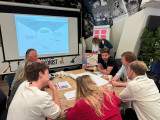
On the 5th of June, during the 28th Knowledge and Demo Day, we explored the topic of Inclusive Design in the context of mobility projects together with a diverse group of network partners. Iris Ruysch introduced the theme on behalf of the Amsterdam Transport Authority (Vervoerregio), while David Koop and Lotte de Wolde from our knowledge partner Flatland facilitated the session format, moderation and visual notes.
The ambition of the Amsterdam Transport Authority
The Amsterdam Transport Authority is responsible for public transport across fourteen municipalities in the region and is working towards a mobility system that enables people to travel quickly, safely and comfortably by public transport, bicycle or car. In addition to organising and funding public transport and investing in infrastructure, the Authority actively contributes to broader societal goals such as sustainability, health and inclusivity.
Inclusive mobility is one of the key themes within the wider mobility policy. The central principle is that everyone – regardless of age, income, disability, gender or background – should be able to travel well and comfortably throughout the region. This calls for a mobility system that is accessible, affordable, appropriate, socially safe and welcoming.
The aim of the session on 5 June was to work with the network towards an initial action plan for applying inclusive design principles in mobility projects. Iris is keen to ensure that the ambitions around inclusivity are not only stated in policy and vision documents but are truly embedded in the organisation – from policymakers to implementation teams.
Session set-up
After an introduction by Iris on the context and ambitions within the Transport Authority, we got to work. In small groups, participants explored the profile of the implementing civil servant (using a persona canvas) and considered desirable changes in approach; in terms of attitude, skills and collaboration.
We then used the Inclusive Design Wheel to examine how existing programme components of the Authority could be made more inclusive. In pairs, we tackled themes such as accessible travel information, social safety at stations (specifically for women), and improving bicycle parking facilities.
The Inclusive Design Wheel is an iterative process model that supports the structural integration of inclusivity into design and policy projects. The model emphasises collaboration, repetition, and continuous learning. It consists of four phases:
- Explore: Gather insights about users, their needs, and potential exclusion.
- Create: Develop ideas, concepts, and prototypes that address inclusive needs.
- Evaluate: Test whether the designs are inclusive, collect feedback, and make improvements where necessary.
- Manage: Ensure shared understanding, set goals, engage stakeholders, and embed the process.
Outcomes and insights
While the persona profiles were being developed, I observed the group discussions and noted several important insights to take forward in the development of the action plan:
- Awareness and concrete translation: Implementation teams often already have an intrinsic motivation to contribute to inclusivity goals set in policy. However, they may not always realise how their day-to-day work can support those goals. It’s important to continuously ask the question ‘How, exactly?’. Tools like checklists, templates and practical examples can support this translation from policy to practice.
- Flexible guidelines and not ‘extra work’: Given the differences in scale, pace and content of projects, guidelines need to be flexible. There must also be sufficient room in terms of time and budget. Most importantly, these guidelines and action plans should feel supportive, not like extra rules or bureaucracy. Too many rigid frameworks can backfire.
- Interaction between policy and implementation: There is a need for more two-way communication. Implementation teams want to be involved early in policy development, especially when they will be the ones carrying it out. They also want opportunities to reflect with policymakers on whether policy is being implemented as intended. This allows for timely feedback and course-correction based on real-world experience.
- An Inclusive Design mindset: Beyond sharpened policy documents and a stronger focus on the end user, Inclusive Design also requires a mindset – one that is inquisitive and reflective. Embedding this within the organisational culture will require more than just an action plan.
What’s next
Iris collected valuable input to kick-start the development of the action plan, and participants gained a better understanding of the Amsterdam Transport Authority, the principles of Inclusive Design, and what it takes to move from policy to implementation. This summer, a trainee will start at the Transport Authority to further develop this topic and the action plan. The session, this report, and Flatland’s visual notes provide a strong foundation to build on. We’ll be meeting with Iris and David to explore how we can support this follow-up.
Would you like to learn more about any of the topics or developments mentioned in this report? Feel free to email pelle@amsterdaminchange.com.
Noor Veenhoven,
Program manager energy & circularity
at Amsterdam InChange,
posted
Demoday #28: How to keep our mechanics on the move?
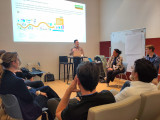
On the 5th of July, during Demoday #28, we zoomed in on one of the pressing challenges facing the energy transition: grid congestion, and more specifically, how to keep the people who maintain the grid moving efficiently.
Grid congestion is a serious and growing concern for grid operator Alliander. It is therefore essential to speed up the grid reinforcement as much as possible. Alliander’s Operation 2.0 team is exploring innovative ways to work smarter, faster, and more flexibly to keep pace with these developments.
Their efforts focus on three tracks:
• Alleviating staff shortages by training office employees to occasionally support fieldwork.
• Exploring technologies like advanced ground radar to get better insights into underground assets.
• Improving the logistics of supplying mechanics to ensure they have the right tools, in the right place, at the right time.
This last track was the main focus of our work session.
Inefficient supply of mechanics
Logistics experiences show that mechanics collect materials inefficiently when supplying their vans and jobs, resulting in stock corrections, less control over stock, unnecessary work for logistics staff, and valuable mechanic hours being lost, which leads to less execution work. A few key problems stood out:
• Supplies are scanned inconsistently, so the system doesn’t reflect what is actually in stock.
• Every van is different, with a custom layout that suits the preferences of its mechanic.
• The work itself is unpredictable, which makes standardised restocking difficult.
• With a transition to smaller electric vans, space is becoming even more limited.
A simple optimisation of the process is not enough, especially without considering the human element. For many mechanics, a visit to the supply centre is more than just logistics. It is a moment of connection, a short break from the road, or simply a chance for a good coffee.
Ideas from the network
In groups of four, we brainstormed creative ideas to improve the supply of Alliander vans while keeping the needs and routines of mechanics in mind.
Some highlights:
• Peer-to-peer van inspiration: Let mechanics share the layout of their vans with colleagues. They can exchange best practices and take pride in an efficient setup. Adding a bit of gamification might boost motivation even more.
• A mobile supply service: A supply van could drive around to restock mechanic vans, reducing the need to visit the supply centre. However, this might remove the social element of taking a break with colleagues.
• Smarter routing: Track the location of mechanics only in relation to nearby grid faults. This way, the closest available mechanic can respond without feeling like their movements are constantly being monitored.
• Package-based resupply: Inspired by delivery service Picnic, mechanics could exchange complete “supply packages” instead of picking out materials individually. Collaborating with wholesale suppliers could reveal more useful insights.
• Automatic stock tracking: Tag all materials with RFID chips and use sensors installed in the door of the van to register what is removed from the van. This eliminates the need for manual scanning and reduces the chance of mistakes.
Do you have a bright idea to improve how mechanics work? Let us know in the comments or send a message to Noor at noor@amsterdaminchange.com.
A big thank you to Thomas Hoekstra and Iris van der Zanden from Alliander for bringing this challenge to the network, and to Chantal Inia from Royal HaskoningDHV for moderating the session.

