Optimal use of our electricity grid
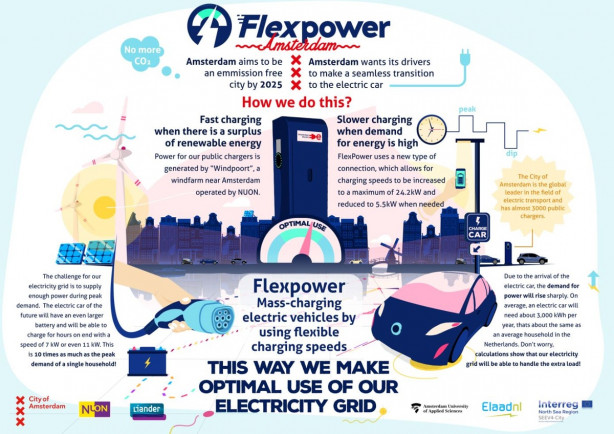

The city of Amsterdam is preparing together with Nuon/Vattenfall, Liander and ElaadNL for an expected increase of electric cars in the city and the use of more locally generated renewable energy. In March 2017 Amsterdam began with 'flexible charging' of electric cars on the public charging network. The main goals are to avoid peakloads on the electricity grid and match supply and demand of sustainable power. The city of Amsterdam wants to stimulate electric mobility by the roll-out of a futureproof and smart public charging network and become emission-free in 2025.
Some first results:
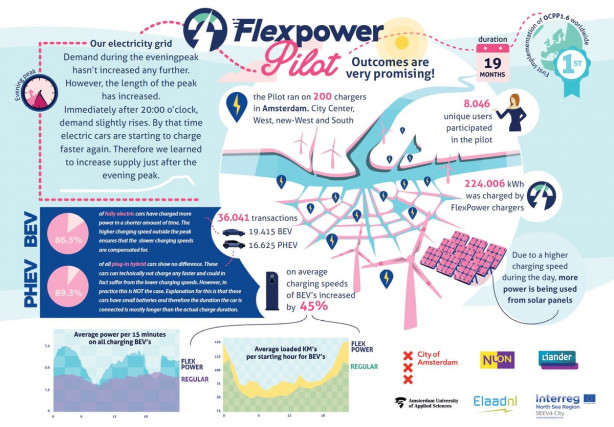
86,5 % of fully electric cars have charged more power in a shorter amount of time. The
higher charging speed outside the peak ensures that the slower charging speeds
are compensated for.
89,6% of all plug-in hybrid cars show no difference. These cars can technically not charge any faster and could in fact suffer from the lower charging speeds. However, in
practice this is NOT the case. Explanation for this is that these cars have small batteries and therefore the duration the car is connected is mostly longer than the actual charge duration.
Due to a higher charging speed during the day, more power is being used from solar panels.
The first implementation of OCPP* 1.6 smart charging profiles on a public charging network (*Open Charge Point Protocol)
City of Amsterdam, Nuon /Vattenvall, Liander, ELaadNL, and Amsterdam University of applied sciences (HvA). Flexpower is also part of the Interreg SEEV4city Pilot of Amsterdam
The first results of the project are promising. Cooperation is being continued and we are looking at the opportunity for scaling up!
Rolling out a smart and future-proof public charging network
Get notified about new updates, opportunities or events that match your interests.

Join us for an exclusive webinar featuring three leading European cities sharing their proven strategies for EV charging infrastructure placement. Learn from real-world experiences and discover data-driven approaches that are transforming urban mobility across Europe.
๐ช๐ต๐ฎ๐ ๐ฌ๐ผ๐'๐น๐น ๐๐ฒ๐ฎ๐ฟ๐ป
๐๏ธ ๐ฆ๐๐ฟ๐ฎ๐๐ฒ๐ด๐ถ๐ฐ ๐ฃ๐น๐ฎ๐ฐ๐ฒ๐บ๐ฒ๐ป๐ ๐๐ฝ๐ฝ๐ฟ๐ผ๐ฎ๐ฐ๐ต๐ฒ๐ - Discover how Brighton & Hove, Oslo, and Metropolitan Region of Amsterdam Electric have developed their EV charging strategies
๐ ๐๐ฎ๐๐ฎ-๐๐ฟ๐ถ๐๐ฒ๐ป ๐๐ฒ๐ฐ๐ถ๐๐ถ๐ผ๐ป ๐ ๐ฎ๐ธ๐ถ๐ป๐ด - Learn about the tools and methodologies these cities use to optimize charging point locations
๐ ๐ฆ๐ฒ๐ฟ๐๐ถ๐ป๐ด ๐๐น๐น ๐ฅ๐ฒ๐๐ถ๐ฑ๐ฒ๐ป๐๐ - Understand how to address the needs of residents without private parking spaces
๐ ๐๐ป๐๐ฒ๐ฟ๐ป๐ฎ๐๐ถ๐ผ๐ป๐ฎ๐น ๐๐ฒ๐๐ ๐ฃ๐ฟ๐ฎ๐ฐ๐๐ถ๐ฐ๐ฒ๐ - Gain insights from three different countries and municipal perspectives
๐ก ๐๐ฒ๐๐๐ผ๐ป๐ ๐๐ฒ๐ฎ๐ฟ๐ป๐ฒ๐ฑ - Avoid common pitfalls and learn from real implementation experiences
๐๐ฒ๐ฎ๐๐๐ฟ๐ฒ๐ฑ ๐ฆ๐ฝ๐ฒ๐ฎ๐ธ๐ฒ๐ฟ๐
Kieran Fitsall - Brighton & Hove Council
Sture Portvik & Sara Teige Kalsaas - City of Oslo
Annekee de Jager - MRA-e (Amsterdam Metropolitan Region)
Hosted by Sanne van Breukelen - Cenex Nederland
๐ช๐ต๐ ๐๐๐๐ฒ๐ป๐ฑ?
With Europe requiring 6.8 million public charging points by 2030, municipalities face unprecedented challenges in planning and implementing EV infrastructure. This webinar brings together three cities that have successfully navigated these challenges, offering practical insights for:
- Municipal planning departments
- Urban mobility professionals
- EV infrastructure developers
- Policy makers and city officials
- Transport consultants
๐๐ฒ๐ ๐ง๐ผ๐ฝ๐ถ๐ฐ๐ ๐๐ผ๐๐ฒ๐ฟ๐ฒ๐ฑ
- Historical approaches vs. modern data-driven strategies
- Stakeholder engagement
- Grid capacity considerations and smart charging integration
- On-street charging solutions for urban residents
๐ช๐ต๐ผ ๐ฆ๐ต๐ผ๐๐น๐ฑ ๐๐๐๐ฒ๐ป๐ฑ
This webinar is essential for anyone involved in:
- Urban planning and development
- Sustainable transport initiatives
- EV infrastructure deployment
- Municipal policy development
- European mobility strategy
๐ฅ๐ฒ๐ด๐ถ๐๐๐ฟ๐ฎ๐๐ถ๐ผ๐ป
Don't miss this opportunity to learn from Europe's leading cities in EV infrastructure planning. Register now to secure your spot and gain access to exclusive insights that could transform your city's approach to EV charging.
---
This webinar is part of Cenex's ongoing commitment to accelerating the transition to sustainable transport through knowledge sharing and best practice dissemination across European cities.

Everything Urban 001 (LinkedIn Event) is the first in the Interactive Talk series for students and young professionals interested in Urban Affairs i.e. urban planning, urban management, architecture, sustainability, smart cities, to name some. Feel Free to attend it on September 4, 2025. More details in the link.

During this ThingsCon Salon, we explore how to give good intentions a lasting place in smart city projects. Join us!
On October 29th from 16:00-19:00 we will be at the stunning Scheveningen Pier for a workshop and talks on how to give good intentions a lasting place in government digital projects. Sign up here!
What is the Thingscon Salon about?
When you interact with the municipality, you often first encounter a digital tool: a website, a menu system, an algorithm, or a parking scan car. There are important reasons behind such digital systems: they're convenient and often efficient.
But if things go wrong, citizens shouldn't get lost in the digital reality. That's why the municipality promises its residents, for example in a coalition agreement, the human dimension in the digital city. And according to project plans, a digital tool should be fair, accessible, transparent, and just.
These kinds of good intentions are formulated before or at the beginning of development processes, but can sometimes slip out of view along the way. During procurement, development and implementation, choices are made that later seem to clash with the original intentions.
How do we design so that good intentions remain leading not just at the beginning, but also during execution?
During this ThingsCon Salon, we explore how to give good intentions a lasting place in government digital projects. Using one or two case studies, we'll develop concrete methods in a workshop to make intentions tangible and maintain them throughout the entire process โ from administrative agenda to technical implementation and practical, daily use.
This Salon is co-organized by the 'Human Values for Smarter Cities' project from the Amsterdam University of Applied Sciences and Smart City The Hague. The program consists of a workshop and several speakers.
Tessa Steenkamp and Mike de Kreek will host the workshop.
Date: Wednesday October 29th
Time: 16:00-19:00
Location: Infopunt Scheveningen
Flex Energy is exactly the topic of flexcon2018.eu, 26 & 27 November in Brussels. More than 30 talks and workshops on smart energy, all international. https://flexcon2018.eu/talks-workshops/