Stay in the know on all smart updates of your favorite topics.
Herman van den Bosch,
professor in management development
,
posted
Digital tools as enablers of a circular economy. The Amsterdam case
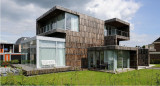
In the 19th episode of the Better cities - the contribution of digital technology-series, I address the question of how digital technology can help in the long road to a circular society.
The contribution of digital technology becomes most visible when viewed in conjunction with other policy instruments and actions. That is why in this episode Amsterdam is in the spotlight; this city has been pursuing a consistent circular policy from 2015 onwards.
Why is a circular economy necessary?
European countries together need an average of 2.9 copies of planet Earth to meet the needs for raw materials. But even one Earth has finite resources, and it is therefore obvious that more and more countries aim to be circular by 2050. The circular processing ladder contains a range of options with the lowest step recovery of energy from materials unsuitable for re-use and furthermore recycling, repurposing, remanufacturing, renovation, repair, reuse, reduction, reconsideration to rejection.
A circular economy is an economic and industrial system that eliminates waste and takes the reusability of products and raw materials and the regenerative capacity of natural resources as a starting point, minimizes value destruction in the total system and pursues value creation in every link of the system. In this context, the term cradle-to-cradle design is often referred to. This is done in terms of material flows and the preservation of values, so that in the long term there is no longer any need for an influx of virgin materials. Maersk has developed a cradle-to-cradle passport, a first for the shipping industry, consisting of a database of all ship components, including all the steel, for recycling, reuse and remanufacturing of new ships or their parts.
The Digital Sustainability-memorandum is considering digitization as an enabler on the way to a circular economy. A fourfold distinction is made in this regard: (1) the coordination of supply and demand of materials, (2) facilitating maintenance and repairs, (3) improving the production process, and (4) supporting partners in chain cooperation. Examples of all these options are discussed below.
Amsterdam and the realization of circular principles
Amsterdam's ambition is to use 50% less virgin raw materials by 2030 compared to the current situation. This goal is also very important for achieving its climate targets: 63% of the CO2 emissions for which the city is responsible come from products and materials that are produced abroad. The municipal government can only partly influence this steam. That is why the policy focuses on three areas where the city has most influence, namely food and organic residual flows, consumption and the built environment.
Amsterdam published its first policy plan Amsterdam Circular: Vision and roadmap for the city and regionin 2015. The emphasis was on organic waste and the built environment. It included 75 action points and its approach was positively evaluated in 2018 and a new report was published. It was decided to continue with the same emphasis with the addition of food and consumption. The addition of consumption was obvious, because Amsterdam had been making a strong case for the sharing economy for some time.
Shortly after the publication of the new report, Kate Raworth’s donut-principles made their entrance. Remarkably, none of the previous reports contain a reference to her work on the donut economics. In May 2019, the first fruit of the collaboration with Kate Raworth appeared, building on the report from the previous year. The collaboration resulted in a new report Building blocks for the new Amsterdam Circular 2020-2025 strategy, involving many stakeholders from the sectors, food and organic residual flows, consumption, and construction. It resulted in 17 building blocks, named 'development directions'.
This report was based on the original 2012 publication on the donut economy. However, there turned out to be one pitfall. The original donut model was designed for global-level applications, which, according to Kate Raworth, cannot be directly traced to the urban level. The social implications of behavior in one city not only affect this city itself, but also the rest of the world. The same applies to the ecological aspects.
As a next step Kate Raworth invited representatives from Amsterdam, Philadelphia and Portland to join a task force and discover what a city-level donut model looks like. In each of these cities, dozens of officials and citizens participated in an interactive process. The result was a new model that uses four lenses to view urban activities: The first and second resemble the original lenses but applied at the city level, for example, the impact of local industry on local nature. The third is how activities in a certain city had a negative social impact on the rest of the world, think for example of clothing, produced under poor conditions. The fourth is the impact of local actions on nature worldwide.
These activities resulted in a new publication, The city donut for Amsterdam. It is an instrument for change that can be applied more broadly than to circular policy. In this publication, the new donut model is mainly used as a conceptual model. Instead of exact calculations, snapshots are collected as illustrations.
While city representatives were busy developing the urban donut model, the work towards the circular city continued unabated, resulting in the publication of the final circular strategy for the period 2020 – 2025 and the action plan for the period 2020 – 2021 at almost the same time. In terms of content, these plans are in line with the publication of the building blocks-report from 2019, including the application of the 'old' donut model from 2012.
In the following, I use both the strategy and the action plan to show the role of digital tools. At the end, I come back to the future role of the city donut.
Digital techniques in the circular strategy of Amsterdam 2020 – 2025
I align with the three value chains: food and organic residual flows, consumption and the built environment that are central to the strategy. Three ambitions are formulated for each of these three, further detailed in several action directions, each containing several projects, most with measurable results to attain in 2021. In addition, a couple of projects are described, that bare related to types of companies, institutions and the port. Finally, there are overarching projects, in which I will again pay attention to digitization, also because the role of the city donut will become visible here.
Below I briefly describe the three value chains, name the three ambitions for each, and give references to digital tools that will play a role within each of the three value chains.
Value chain food and organic residual flows
The municipality wants to combat food waste and reuse organic residual flows as much as possible. The role of regionally produced (plant-based) food will be strengthened in line with the Amsterdam food strategy. In realizing its objectives, the municipality participates in an extensive European project, Rumore.
The three ambitions are: (V1) Short food chains provide a robust, sustainable sensory system, (V2) Healthy and sustainable food for Amsterdammers and (V3) Food and organic residual flows.
Examples of digital tools
• GROWx vertical farm is a farm that aims to achieve maximum returns by applying artificial intelligence to the indoor cultivation of food crops, among other things.
• Restore is a measurement system and simulation model for Amsterdam and surrounding municipalities and companies that provides insight into the financial, ecological, and social effects of various forms of composting and bio-fermentation, including the use of biomass.
• The InstockMarket platform will map (surplus) food flows and - if possible - predict them so that the catering industry can anticipate this when purchasing. The data from this project will be linked to the circular economy data platform
• The Platform www.Vanamsterdamsevloer.nl makes all local food initiatives (including food events) visible and residents of Amsterdam can share news about food and urban agriculture.
Value chain consumer goods
The emphasis is on consumer goods that contribute substantially to the depletion of rare raw materials, their production is polluting and often takes place under poor working conditions. In addition, the impact on climate change is significant. The emphasis is on electronics, textiles, and furniture because repair is also possible in each of these cases.
Furthermore, a lot of profit can be made by good collection and reuse through sharing and exchange.
Here too, a multi-year research project funded by the European Commission is important. The Reflow project maps data on flows of materials and develops processes and technology to support their implementation.
The ambitions are :(C1) The municipality is setting a good example and will consume less; (C2) Together we make the most of what we have and (C3) Amsterdam makes the most of discarded products.
Examples of digital tools
• The municipality will develop digital tools within the (purchasing) systems that support civil officers in circular procurement.
• The West-district supports www.warewesten.nl. This website brings together the sustainable fashion addresses of Amsterdam-West.
• Using artificial intelligence, among other things, it is being investigated how the lifespan of various goods can be extended so that they do not end up with bulky waste. This can be used, for example, on the municipal website to offer the option of first offering goods for sale or for giving via existing online platforms before they are registered as bulky waste.
• Indirectly, it is worth noting that the municipality wants to make the use of ICT more sustainable by purchasing less equipment (for example through 'hardware as a service'), extending the lifespan of equipment and reducing its energy consumption.
Value chain built environment
This value chain was also chosen because the municipality has an important voice in what and where is built and in the development of the public space. The municipality itself is also a major user of buildings.
In terms of the built environment, circular construction can be achieved through large-scale reuse of construction waste. By ensuring that buildings can be used for more purposes, their demolition can be slowed down. Sustainable materials can also be used in the design of public spaces – from roads and bridges to playgrounds. In addition, consideration could be given to the climate-adaptive design of the city, resulting in cleaner air and dealing with increasing heat and rainfall.
The ambitions are: (G1): We do circular development together; (G2) The municipality sets a good example and uses circular criteria; (G3) We deal circularly with the existing city.
Examples of digital tools
• Introduction of large-scale application of material passports to have the most complete information possible on material use in all phases of the life cycle of buildings. This is linked to national plans, among other things by providing all materials with an OR code.
• Research into the possibilities of a (national) online materials marketplace. Such a marketplace will influence (local) material hubs, such as the Amstel III construction hub and the creation of circular business cases.
• Providing insight into the supply (demolition, renovation) and demand (new construction, renovation) of circular building materials and thus of circular material flows.
• Creating a digital twin of the public space and the subsurface to be able to furnish and maintain it functionally and circularly.
• Research in digital production due to the rapid development of digital production techniques and their applications, such as robots and 3D printing.
• Research into making the construction, equipment and water and energy consumption of data centers more sustainable.
• Research into which data about residents and users of buildings can be made public and which data should remain private.
The municipality could further simplify the process of permit applications by digitizing everything, enabling applicants to upload the necessary municipal data and construction drawings and calculating the BREAAM score. This applies to both new and renovated buildings.
Overarching theme: Data platform and monitor circular economy
On the road to a circular economy, a lot of data will become available and just as much data is needed to help citizens, companies, and institutions to make sustainable choices and to determine whether the goal of 100% circularity by 2050 is within reach. That is why a data platform and monitor is being developed. This numerically maps all material, recycle, residual and waste flows that enter, leave, and go around the city. This also makes it possible to calculate the impact on CO2 emissions. The data from the material passports and the materials marketplace are also integrated herein, if possible. The monitor also includes social aspects such as health, education, and equality. Relevant data will be open and accessible, so that it can be used for the development of new innovations and applications by the municipality and third parties, also to connect with other urban transitions.
The monitor connects to the four lenses of the city donut of Amsterdam and will collect the data that is currently missing to provide full quantitative insight. This also concerns the environmental impact of all materials that Amsterdam imports for its own consumption. Where the city donut is currently only a partially quantified, the monitor will continuously provide insight into whether the municipality is staying within the ecological preconditions or where it falls short with regard to the minimum social requirements.
Amsterdam's circular strategy and the resulting action agenda is ambitious and will inspire many other cities. Because many projects are small- and medium scaled, it is not yet possible to assess to what extent the strategy and action agenda help to achieve the targets (50% circularity in 2030 and 100% in 2050). Commitment to the development of the monitor is therefore crucial and the municipality will also have to keep an open eye on the parallel actions that citizens, the business community, the port and other institutions must take to achieve their share. After all, becoming circular encompasses much more than food and organic waste, consumption, and construction.
To document the process of the City of Amsterdam's adaptation of circular policy and the contribution of Kate Raworth, I have put together a brief dossier. This includes references to (copies of) all relevant reports and an indication of their content. This file can be downloaded by following the link below.:
https://www.dropbox.com/s/lntf8izqz7ghvqp/Dossier%20circularity.docx?dl=0
Catalina Iorga,
Content Lead at Amsterdam Impact (City of Amsterdam)
,
posted
Building Better Business Event 2022
Is your company looking for a framework to accelerate and manage its impact on people and the planet?
Join the City of Amsterdam's Building Better Business (BBB) programme to explore how you can be part of a more sustainable and inclusive economy, and pursue a B Corp or Economy for the Common Good (ECG) certification! And sign up for this free event to hear from new economy leaders, connect with other impact-minded companies, and learn the ins and outs of the BBB tracks.
BBB event speakers
The BBB event features a keynote by Michael Weatherhead, New Opportunities and Finance Lead of Wellbeing Economy Alliance and contributions from:
- Katie Hill (B Lab Europe),
- Robin Foolen (B Corp-certified company Secrid),
- Christian Felber (initiator of Economy of the Common Good),
- Joost Broeders (ECG-certified company Baril Coatings).
Who is the BBB event for?
The BBB programme and its inspiration event are geared towards Amsterdam Metropolitan Area-based companies that want to formalise their social impact ambitions and make the transition to a sustainable business model.
BBB is powered by Amsterdam Impact (City of Amsterdam), B Lab, Economy for the Common Good and KplusV.
Dimitri Bak,
Strategic Communication Advisor
at City of Amsterdam,
posted
Monitor Amsterdam Circulair

In Amsterdam praten we steeds meer over het circulair maken van materiaalstromen. Maar om welke materialen en aantallen gaat het nu eigenlijk? Hoe bewegen ze door Amsterdam en welke impact hebben ze op het milieu?
Wethouder Marieke van Doorninck en Rene Koop, programmamanager CE bij Gemeente Amsterdam, delen de inzichten uit de Monitor Amsterdam Circulair. Een monitor – tot stand gekomen in samenwerking met CBS, geoFluxus en TNO – die laat zien hoe materiaalstromen zich door de regio Groot-Amsterdam bewegen. Van import en productie tot consumptie, recycling en verlies. Dankzij de Monitor Amsterdam Circulair weten we hoeveel materiaal er in onze stad rondgaat en wat daarvan de ecologische impact is. De inzichten die we daar uithalen stellen ons in staat om nog betere keuzes te maken in het belang van de circulaire economie.
Benieuwd hoe de monitor werkt? Waarom het een belangrijke asset is voor onze stad? En hoe jouw organisatie een bijdrage kan leveren? Meld je dan aan voor het online event op vrijdag 11 februari tussen 10.00 en 12.00 uur vanuit de studio in Circl.
Met o.a. de volgende sprekers: Marieke Van Doorninck (wethouder Ruimtelijke Ontwikkeling en Duurzaamheid), Rene Koop (programmamanager circulaire economie Gemeente Amsterdam), Arnout Sabbe (Data-expert Geofluxus en AMS Institute), Robert Koolen (directeur duurzaamheid Heijmans) en Nathan de Groot als dagvoorzitter.
Amsterdam InChange,
Connector of opportunities
at Amsterdam InChange,
posted
Meet the members of Amsterdam Smart City! Anne-Ro Klevant Groen: ‘It’s very rewarding to work on a solution with Fashion for Good’
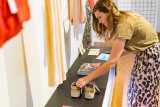
Anne-Ro Klevant Groen is Marketing and Communications Director at Fashion for Good, a platform that connects established fashion brands with startups.
“Ever since I was a little girl, fashion has been my passion. But I also know that the fashion industry has a large, negative impact on people and our environment. We need to transform our current take-make-waste model into a circular fashion system. For me, it is very rewarding to work on solutions via Fashion for Good.
We connect sustainable and innovative startups to corporate fashion companies and manufacturers such as Adidas and C&A. Many startups have fantastic ideas for more sustainable fashion, but they don’t yet have the network or financial resources to connect with large companies. Others want to know more about intellectual property or marketing. Our mentors help these startups with tailor-made programs based on their maturity.
Corporations invest in us to help us do our jobs, but they also dedicate teams and time to our programmes. We help them with impact assessments so they can see where they will be most effective, and then we connect them to the startups that fit their goals. C&A, for example, was part of a pilot that used blockchain technology to improve transparency in the organic cotton industry. The technology helps trace the origin of organic cotton, similar to what is already being done with coffee and cocoa. Tommy Hilfiger has collaborated with a startup that makes vegan leather from the pectin in apples. We are also starting our own foundational pilot projects, including one with chemical recycling and another that’s working on developing circular polybags for clothes, such as the bags that are wrapped around our clothing when we order from webshops.”
The Amsterdam ecosystem
“Amsterdam offers us plenty of opportunities. It is a very creative city and home to many of the large fashion house’s headquarters. There’s also a good startup and investment climate. We have a co-working space in the heart of Amsterdam for innovative, sustainable fashion startups and freelancers. It’s a large open space where individuals or companies can rent desks and connect to other members of the Dutch circular fashion ecosystem. We always have some space available, so feel free to contact us if you want to be part of our network.
We are also working on an education program for MBO schools to ensure that the fashion industry’s future workforce understands the need to get rid of that take-make-waste model.
For consumers, we have the Fashion for Good Museum on the Rokin in Amsterdam, where we want to educate visitors so they can make better fashion choices. The museum industry is still fairly new to us, and we would like to get in touch with parties that can help us reach more people. Ultimately, it is consumers who either have to buy less or get to know more about the sustainable apparel our partners are developing, make better decisions and demand a better product.
We publish what we learn about sustainable clothing and textiles in our website’s Resource Library. It’s accessible to everyone—free of charge—so startups don’t have to waste valuable time reinventing the wheel. By working together better, we work more efficiently and can accelerate our transformation to a circular fashion system.”
If you’d like to get in touch with Anne-Ro, you can find her on this platform.
This interview is part of the series 'Meet the Members of Amsterdam Smart City'. In the next weeks we will introduce more members of this community to you. Would you like show up in the series? Drop us a message!
Interview and article by Mirjam Streefkerk
Caroline Oort,
posted
Transform Single-use Waste Plastic into Valuable Products
On Thursday, November 4, 2021 you are most welcome to join the webinar about TRANSFORM-CE in English. The project team will then tell you what it is looking for and provide examples of business support opportunities.
Opportunity for your business?
Interreg NW Europe funded project, TRANSFORM-CE, launches the first in its informative webinar series on turning single-use plastic waste into valuable new products. It will introduce two innovative technologies, additive manufacturing and intrusion-extrusion moulding, which are facilitating the transformation of this common waste stream into the feedstock for countless applications, from roof tiles and decking to architectural models and 3D printed components. This is a fantastic opportunity for businesses, manufacturers and government authorities interested in learning more about TRANSFORM-CE and the potential benefits of transitioning to a circular economy business model. The project partners also welcome designers, creatives and members of the public who are interested in exploring the potential of single use plastic waste.
New technologies for a circular economy of plastic?
TRANSFORM-CE is currently running two pilots to turn single-use plastic waste into raw plastic feedstock: an AM R&D centre in Greater Manchester (United Kingdom) and an IEM plastic factory in Almere (The Netherlands). A third AM facility, a prototyping centre, will open early 2022 in Belgium. Work has already begun, using the feedstock to manufacture products like outdoor furniture, building materials and even houses. Once the technology is scaled up, TRANSFORM-CE’s partners will have the potential to develop circular economy business models and stimulate new secondary material markets across North West Europe and beyond. Waste plastic can be re-purposed and revalued.
Who will speak?
• Rhiannon Hunt: Circular Economy Project Manager at Manchester Metropolitan University, UK.
• Bram Peters: Owner of the Green Plastic Factory Almere and Save Plastics, the Netherlands.
• Malou van der Vegt: Researcher and Lecturer in the Circular Economy at the Utrecht University of Applied Sciences, the Netherlands.
• Evert-Jan Velzing: Scientist and Lecturer at the Utrecht University of Applied Sciences, the Netherlands.
David Greenfield will be the facilitator of the webinar. He is managing director and founder of SOcial, ENvironmental & EConomic Solutions (SOENECS) Ltd.
What will be preliminary programme?
14:00 Opening address and introduction to TRANSFORM-CE
14:05 Transforming single-use plastic waste into filament for additive manufacturing
14:15 Creating new products from single-use plastic waste using intrusion-extrusion
moulding
14:25 The business case for adopting circular economy solutions
14:45 Be a part of TRANSFORM-CE; opportunities for businesses
15:00 Q&A
Jasmyn Mazloum,
Communicatie
at Gemeente Almere,
posted
Circulair ondernemen voor het MBK / Blunder Breakfast Almere
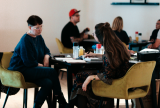
BLUNDER BREAKFAST - Circulaire ondernemers uit Almere geven je concrete voorbeelden van hoe circulair ondernemen er uit kan zien en vertellen over de dingen waar zij tegenaan zijn gelopen.
Na een eerste editie eerder dit jaar, gaan we verder met een tweede reeks workshops over circulair ondernemen. In de eerste sessie horen we de verhalen van Almeerse ondernemers die hun blunders en successen met ons delen. Welke keuzes hebben zij gemaakt en wat zouden zij anders hebben gedaan?
Wat kun je verwachten?
• Een informele bijeenkomst met leuke verhalen en leerzame ervaringen uit het Almeerse duurzame bedrijfsleven
• Netwerken met andere Almeerse ondernemers
• Leuke start van een boeiende reeks onder het genot van een kopje koffie en zoete broodjes om je dag mee te beginnen!
De Blunder Breakfast is onderdeel van een reeks bijeenkomsten, georganiseerd door Van Loof in opdracht van de Gemeente Almere. Deze bijeenkomst is op woensdag 22 september en duurt van 10:00 tot 12:00, in het World Trade Center in Almere. Het adres is P.J. Oudweg 4, 1314 CH, Almere. Het WTC ligt naast het station en is daarom makkelijk bereikbaar met het openbaar vervoer, er zijn ook diverse parkeergarages in de buurt.
Zien we je daar? Meld je aan of lees meer via de link!
Robin Masereeuw,
Speaker curator
,
posted
TEDxAmsterdam is looking for sustainable entrepreneurs
Are you a sustainable entrepreneur and would you like to take that next step? TEDxAmsterdam is looking for initiators of disruptive innovations and concrete ideas that fit our planet's future needs; social and/or environmentally. We offer 1-on-1 mentorship, business & storytelling workshops, pitch coaching and presentation design. And the chance to present on a TEDx stage.
Who are our pioneers?
The Impact Program is suitable for people from all walks of life with an ambitious and entrepreneurial nature. It specifically caters to those in need of guidance to jumpstart benevolent solutions within the Amsterdam region. We are not talking about idealistic dreams and utopian fairy tales but rather initiators of disruptive innovations and concrete ideas. We like to call these great minds “Pioneers”.
The criteria
- All pioneers(s) or team members must be at least 18 years old
- The pioneer needs to have a concrete, actionable business idea or product
- A genuine excitement to have a positive impact within Amsterdam and beyond
- Each pioneer must demonstrate unwavering commitment to work on their business idea
- Each pioneer must make a commitment to spend around 2 to 3 hours a week at the program; e-learning, online and offline coaching, home work
- Available in Oct/Nov/Feb for a monthly offsite event
- The Pioneer is comfortable enough to speak at a TEDx event in English
For the idea to be suitable, you will want to keep in mind about whether you:
- Found a problem worth solving
- Have a viable business model (problem/solution fit) for the product/service
- Have conducted market and competitor research
- Are fully committed to continue with the startup development
- Have a proof of concept or Minimum Viable Product in place or working on it
- Have already some traction
Sign up for the TEDxAmsterdam Impact Program and let us help you bring your idea(s) to life. Apply before October 3rd.
Beth Njeri,
Communications & Events Manager
at Metabolic,
posted
Reimagining our relationship with land through regenerative agriculture.
The term regenerative agriculture is popping up more and more often in news and articles. Often mentioned as the key to agricultural green transition, important for carbon sequestration purposes… but what is it exactly?
Regenerative farming, or farming in line with nature, also known as restorative agriculture or eco-agriculture, is a nature-based solution, and it is significantly different from organic farming.
Learn more from this article.
Beth Njeri,
Communications & Events Manager
at Metabolic,
posted
How to create a sustainable bioeconomy
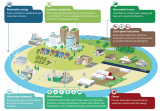
Today the bioeconomy is everywhere: We see it in the clothing we wear, the packaging that comes to our house daily, the house we live in, the food we eat, and the energy that fuels our life.
For the bioeconomy to truly be sustainable and circular, it must meet certain conditions:
• Using fundamentally renewable biological feedstocks
• Maximizing the varied types and cycles of biological resources
• Contributing to the biological cycle
Learn more from this article.
Camille Janssen,
Sustainability Consultant
,
posted
Students for a Circular Economy
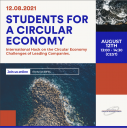
Let's tackle the most urgent challenges, together. On the 12th of August, we will bring together students from over the world from different domains to exchange knowledge, form teams and tackle circular economy challenges. This can be the opportunity for young individuals who want to use their skills for good to connect with leading companies and make a direct impact.
Looking for solutions.
Can you help Unilever create an operational model for the reuse of packaging? Do you have what it takes to help P&G reduce the environmental contribution of local product
customization? Can you help find Intel industrial symbiosis solutions for specific waste streams? These are just three of the 24 challenges that are part of the Circular Innovation Competition that are looking for a solution.
Explore all challenges at: circularsolutions.co.il
The Circular Innovation Competition.
The competition is open to anyone of any nationality above the age of eighteen - scientists, entrepreneurs, students, intrapreneurs, and other people with ideas. In short, we invite all types of innovators to submit a solution to the circularity challenges of the participating companies. Ten finalists will be selected by our jury, amongst them the President of Philips Israel and the Managing Director of Closed Loop Partners together with the challenge providers. Three winners will be declared, who will win up to 2.500 EUR together with the chance to participate in Afeka’s accelerator program for team members of the first two selected members.
Zéger Nieuweboer,
Founder / Teacher
at Learning is growing.nl,
posted
Green food walking trail in Arnhem
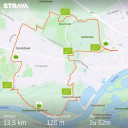
Green consumers engage green growers in the green food trail around the city of Arnhem, The Netherlands.
Anne-Ro Dubos-Klevant Groen,
Marketing and Communications director
at Fashion for Good Museum,
posted
Fashion for Good Masterclass: designing with nature (Hybrid)
Hybrid event: join virtually or in person!
The Creative Directors of BOTTER and Nina Ricci, will take you into a deep dive on the relationship between nature and designing fashion.
Since forever, collections are based on the galaxy, designs based on fungus, floral application or leopard print accessoires - nature is a massive source of inspiration for the fashion industry.
Lisi Herrebrugh and Rushemy Botter take this a level up. Their BOTTER manifesto says:
“(...) We care about fashion, as the golden daughter of all arts. We care about nature, as the golden mother of all arts. Without nature, no arts, nothing. Without the sea, no human, no us. (...)”
The BOTTER Coral Nursery, an organization that actively works on reviving the coral reef, and using innovative materials, such as the ocean waste plastic materials, for their collections is part of their mission to make a change in the industry.
Nature is not only their inspiration to create fashion, but also their drive.
Join the masterclass to learn more about their thought processes for creating fashion for BOTTER and Nina Ricci, struggles they’ve come across and their ultimate dreams.
Some questions that will be answered:
What does a day in the life of Lisi and Rushemy look like?
When and how did nature start influencing their work?
What is their biggest source of inspiration?
Are there assessments to be made between nature and commerciality?
What can you, as a consumer, do to make a positive impact?
If you have any questions for Lisi and Rushemy, please make sure to submit them or ask them during the Q&A!
AGENDA:
16.00: start event & welcome by FFG
16.05: deep dive by Lisi Herrebrugh & Rushemy Botter
16.40: Q&A
17.00: end of event
Anne-Ro Dubos-Klevant Groen,
Marketing and Communications director
at Fashion for Good Museum,
posted
FASHION FOR GOOD MUSEUM LAUNCHES AUDIO TOUR
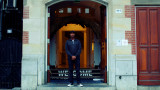
From Wednesday July 28th, the Fashion for Good museum features a new audio tour narrated by Dutch rapper Dio. In the tour, visitors can listen to Dio explain the rise of fast fashion, why sustainable fashion is so important for people and planet, and what kinds of natural materials can be used to create the fashion of the future. The tour is in Dutch and is free to all visitors to the sustainable fashion museum on the Rokin in Amsterdam.
The Fashion for Good Museum audio tour is made possible with the support of the Kickstart Cultuurfonds.
Anonymous
posted
Ready to meet the winners of the No Wast Challenge and their ground-breaking ideas?
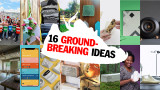
Ready to meet the winners of the WDCD No Waste Challenge? Earlier this evening, a total of 16 ground-breaking ideas were selected for the top prize, representing a wide range of strategies for reducing waste and its impact on the planet. Each winning team will now gain access to €10.000 in funding and an extensive development programme designed to launch their ideas into action.
“The quality and range of entries we’ve seen in this Challenge is remarkable,” comments Richard van der Laken, co-founder and creative director of What Design Can Do. “In a turbulent year, it’s particularly inspiring to see that the creative community is willing and able to break away from decades of linear thinking and bad design. I’m hopeful that others in the industry will follow their lead.”
Revolutionizing the the taking and making
The winners were determined by an international jury who reviewed every project from a list of 85 high-potential nominees. Among the ideas to take home the top prize are solutions that focus on the production process – aiming to revolutionise the taking and making of all the things we use and eat. Sustrato (Mexico), for example, combines traditional craft, contemporary design and waste from the pineapple industry to develop a range of sustainable bioplastics. Modern Synthesis (UK) makes use of a similar waste stream, this time from apple farms, to feed microbes that grow fully circular fibers for the fashion industry.
Adressing the underlying problem of consumerism
Meanwhile, other winners are unified by their desire to uproot entire value systems. These projects are looking to prevent waste by addressing the underlying problem of consumerism. Reparar.org (Argentina) for example, is a service which connects individuals to local cobblers and repair shops, working to promote a culture of care and the right-to-repair. Similarly, Project R (Japan), is a community centre that empowers citizens to learn about circular techniques and lifestyles. Together, these winners suggest inventive ways for us to reconcile what we want with what the planet needs. In doing so, they also help to redefine design as a tool that can be restorative and regenerative, instead of merely productive or destructive. Congratulations to all!
ABOUT THE NO WASTE CHALLENGE
What Design Can Do and IKEA Foundation launched the No Waste Challenge in January 2021, calling for bold solutions to address the enormous impact of waste on climate change. The competition was open to innovators everywhere, and offered three design briefs tackling different aspects of our take-make-waste economy. In April, the open call ended with an exceptional 1409 submissions from creatives in more than 100 countries. As part of the No Waste Challenge award package, sixteen winners will now enter a development programme co-created by Impact Hub, which will propel their projects through 2022.
Learn more about the No Waste Challenge at: nowaste.whatdesigncando.com
Henrike Slob,
Marketing Communications Lead
at Impact Hub Amsterdam,
posted
Alternatieven voor Single Use Plastic en Plastic Verpakkingen

Plastic verpakkingen, welke alternatieven en innovatieve oplossingen zijn er?
Om het toepassen van nieuwe innovatieve en duurzame oplossingen te bevorderen koppelen ABN Amro, Impact Hub Amsterdam en TNW innovaties aan bedrijven tijdens het Impact Nation programma. Op 26 augustus doen we dit live bij CIRCL met verschillende experts op het gebied van plastic en verpakking. Tijdens het evenement behandelen we drie strategieën om met het plastic probleem om te gaan en bijbehorende innovaties:
1. Minder plastic: zoals ontwerpstrategieën die minder plastic materiaal vereisen
2. Beter plastic: ontworpen voor hergebruik inclusief retourlogistiek
3. Geen plastic: biobased of andere alternatieve materialen, verpakking weglaten.
Programma:
15:00 Welkomstwoord en introductie door Impact Nation
15:05 ABN Sector Banker David Kemps: B2B plastic
15:10 ABN Sector Banker Retail Henk Hofstede: B2C plastic
15:15 Expert presentatie: Minder plastic
15:30 Expert presentatie: Beter plastic.
15:45 Expert presentatie: Geen plastic.
16:00 Einde virtueel event.
16:00 Q&A met sprekers en publiek bij CIRCL.
16:30 borrel bij CIRCL
Sprekers
Minder plastic: Tim Brekers, Vytal
Beter plastic: Liz Madaras, PoliLoop
Geen plastic: Jan Berbee, Grown Bio
Voor wie:
- MKB
- Startups
- Experts uit de plastic industrie.
Waarom meedoen?
Er zijn 8,5 miljard stuks plastics in de wereld, dat is 1000 kilo per inwoner. En er overlijden 1 miljoen mensen per jaar door gevolgen van plastic. Voor de toekomst is het nodig dat we met elkaar blijven werken aan slim ontwerp, hergebruik, retoursystemen en hoogwaardige recycling.
Locatie
Dit evenement vindt zowel online als offline plaats. Wilt u het event virtueel bijwonen? Kies dan voor het ticket Online bijwonen in de check-out. Daarnaast zijn er 50 regular tickets (Live bij CIRCL) beschikbaar om het event bij te wonen op locatie bij CIRCL, in Amsterdam.
Partners:
Dit evenement is een samenwerking tussen Impact Hub en CIRCL.
Note van ASC: Wil je net iets meer weten? Laat het weten in de comments.
Camille Janssen,
Sustainability Consultant
,
posted
Over 24 circular economy challenges of leading companies are looking for your solution.
We have carefully formulated the circular economy challenges of Israel’s leading companies. Now, it is time to work together to come up with solutions to stimulate the transition from a linear to a circular economy, in the first Circular Innovation Competition in Israel.
The competition is open to anyone of any nationality above the age of eighteen - scientists, entrepreneurs, students, intrapreneurs. In short, we invite all types of innovators to submit a solution to the circularity challenges of the participating companies.
Ten finalists will be selected by our jury, amongst them the President of Philips Israel and the Managing Director of Closed Loop Partners together with the challenge providers. Three winners will be declared, who will win up to 2500 EUR/10.000 NIS together.
Note from ASC: Have a question? Let’s hear it in the comments.
Anne-Ro Dubos-Klevant Groen,
Marketing and Communications director
at Fashion for Good Museum,
posted
Fashion for good - Meet the Innovators: Dyes of the Future
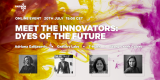
In this year's first edition of 'Meet the Innovators', we bring together innovative technologies disrupting the traditional dyeing-landscape
About this event
For the ‘Dyes of the Future’ event we welcome three innovators from our current programmes with innovations at the forefront of dyeing solutions, alternative dyes and pigments. We’re excited to kick-off with field expert Adriana Galijasevic to discuss the challenges of the industry and the opportunities for new technologies and collaborations in the sustainable dyeing space. Sign up to find out more and learn how they’re helping to shape a new world for fashion.
Agenda:
15:00-15:05 CEST / 18:30-18:35 IST:
- Introduction
15:05-15:25 CEST/ 18:35-18:55 IST:
- Keynote speaker Adriana Galijasevic
15:25-15:40 CEST / 18:55-19:10 IST:
- Innovator Pitches: Graviky Labs, t-hues, Stony Creek Colors
15:40-16:00 (19:10-19:30 IST):
- Q&A (open to audience)
Speakers:
Adriana Galijasevic
Adriana Galijasevic is a designer, action researcher, innovator, educator and an advocate for circular economy in fashion-industry based on the Cradle-to-Cradle design principles. Before starting as an independent consultant, she spent a last decade working for G-Star ‘RAW’ as Denim, Sustainability & Circularity Expert.
Graviky Labs (India)
Graviky is a material innovation startup that turns end-of-life carbon emissions into industrial grade materials. Emissions are recycled into products such as screen-print and inkjet inks, dye stuff and transfer inks that could be used in apparel and packaging applications.
t-hues (Sri Lanka)
t-hues began with a collaboration between Dynawash (an industrial apparel dyer) and SLINTEC (a nanotechnology research institute) that saw the creation of a natural dye produced from tea waste from Unilever. t-hues can offer a sustainable dye with a wide range of colours and a reduction in the carbon footprint.
Stony Creek Colors (United States)
Stony Creek Colors creates a plant-based indigo that can replace petrochemical based synthetic indigo dyes. They optimise indigo production in a (non-GMO) closed loop process which has the potential to be carbon negative. In addition, they are working with small-scale farmers and helping them to switch from tobacco to indigo which can provide them with a more stable income stream and keep prime farmland in agricultural production.
About Fashion for Good:
Fashion for Good was founded to address the problems faced in the fashion industry. In order to change things, we need to innovate. But to date, key innovations are not being scaled; we bridge this gap by bringing the most promising innovators together with industry heavyweights to tackle the industry’s most deeply rooted environmental and social challenges.
We are both an innovation platform and a convenor for change - we house the world's first interactive tech museum for sustainable fashion in Amsterdam and run regular events and workshops to help you on your good fashion journey.
Henrike Slob,
Marketing Communications Lead
at Impact Hub Amsterdam,
posted
Lunchroom | Food Webinars | #1 Alternative proteins

Get to know the latest from the alternative proteins industry and learn about acceleration opportunities in just 30 min during lunchtime!
For whom
- Startups that would like to grow their business
- Idea owners that would like to turn their idea into business.
- Anyone who would like to learn more about alternative proteins
Why join
- The latest development in alternative proteins
- First hand experience about our accelerator and incubator programs on food
- Ask all your questions to our alumni and team
- Expand your network
About Alternative proteins
Alternative protein companies that relate to plantbased protein, cultured meat, and cultured fish are growing strongly. With only about one-tenth the carbon costs of animal-based foods but more “meat-like” product entrants every day, they could transform the food industry completely. While plantbased proteins are derived from pea or wheat ingredients, cultured lab-grown products attempt to make meat from animal cells grown or cultured in a lab, cruelty-free. What are the opportunities in the alternative proteins market in 2021/2022? Join us for a webinar over lunch and get acquainted with the trends and acceleration opportunities.
Program
12:30 intro
12:35 expert talk: 2021 market trends in alternative proteins
12:50 Q&A about our food accelerators
Speakers
FCA alum Brad Vanstone, Willicroft
IRP alum Mark Kulsdom, The Dutch Weedburger
Henrike Slob,
Marketing Communications Lead
at Impact Hub Amsterdam,
posted
Lunchroom | Food Webinars | #2 Regenerative agriculture & biodiversity

What are the opportunities for biodiversity in the market this year? Conventional farming is a huge driver of climate change and biodiversity loss. The good news is that regenerative agriculture could be the answer to turning it all around! However, scaling regenerative agriculture should not fall on farmers alone – it should be a joint effort across the supply chain.
Food companies and retailers should reward farmers who embrace these practices as well as governments, and intergovernmental organizations must reshape policies or plans and even incentivise regenerative agriculture. Consumers should be educated about this problem and encouraged to make conscious food choices, which will grow demand for sustainably produced products. Join us for this webinar and get to know more about the possibilities for your food startup to accelerate the transition to a more sustainable food system.
Get to know the latest from the regenerative agriculture & biodiversity industry and learn about our programmes in just 30 min during lunch!
For whom
- Startups that would like to grow their business
- Idea owners that would like to turn their idea into business.
- Anyone who would like to learn more about regenerative agriculture and biodiversity
Why join
- The latest development in regenerative agriculture and biodiversity
- First hand experience about our accelerator and incubator programs on food
- Ask all your questions to our alumni and team
- Expand your network
Program
12:30 intro
12:35 expert talk: 2021 market trends in regenerative agriculturen& biodiversity
12:50 Q&A about our food accelerators
Speakers
Felipe Villela, reNature
Wij.land
Note from ASC: Would you like to know more? Let Hendrike know in the comments.
Henrike Slob,
Marketing Communications Lead
at Impact Hub Amsterdam,
posted
Lunchroom | Food Webinars | #3 Short & fair value chains
Get to know the opportunities for short & value chains in the food sector and learn about acceleration opportunities in just 30 min!
For whom
- Startups that would like to grow their business
- Idea owners that would like to turn their idea into business.
- Anyone who would like to learn more about a short & fair value chain in the food industry
Why join
- The latest trends in a short & fair value chain
- First hand experience about our accelerator and incubator programs on food
- Ask all your questions to our alumni and team
- Expand your network
Short & fair value chains
The value chain is defined as the set of activities performed to design, produce, market, deliver, and support products. The sustainable food system starts with fair and ethical chains, emphasising quality, safety, diversity, responsibility, and traceability. What are the opportunities for short & fair value chains this year in the market? What do we need to change to be a part of the Sustainable Food Ecosystem? Join us for a discussion over lunch during our webinar and get the answer to these and more chains-related questions. At the end of your lunch break, you will be acquainted with the possibilities for your food startup to accelerate the transition.
Programme
12:30 intro
12:35 expert talk: 2021 market trends in short & fair value chains
12:50 Q&A about our food accelerators
Speakers
Alum Yorick Bruins, co-founder Wakuli
Mentor & sector expert Drees Peter van den Bosch, chairperson Taskforce Korte Keten
Stay up to date
Get notified about new updates, opportunities or events that match your interests.
Set up preferences

