What is the exact meaning of a low carbon neighborhood according to you? My master thesis is about low carbon approach in urban neighborhoods, so I am very happy with all your help
Want to receive updates like this in your inbox?
Get notified about new updates, opportunities or events that match your interests.
Set up preferences
Maybe you will also like these updates
Iskander Smit,
Futures researcher, curator, strategizer
at Cities of Things,
posted
State of Cities of Things: design for the interplay of humans, urban robotics, and physical AI
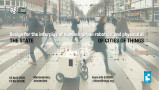
In 2018, the first paper on the Near Future in Cities of Things was published. Seven years later, we took the initiative to conduct exploratory research to reflect on the state of cities of things. Or, put differently: how should we assess the current state of urban robotics and physical AI?
In this interactive event, Iskander Smit will present the learnings from the research, and a panel of four of the approximately 25 interviewed experts will share their perspectives to kick off a discussion led by moderator Monique van Dusseldorp.
The central question is how the developments might impact and inspire the design of future cities, things, intelligent systems, and the interplay between these.
The panelists
- <strong>Maria Luce Lupetti</strong>; Assistant Professor in Design at Politecnico di Torino. She is co-director of POEL – Possible Entanglements Lab, a research group dedicated to investigating how people and technologies co-shape one another, and how design can help envision desirable configurations. She was the leading author of the first paper on Cities of Things in 2018. Maria Luce will reflect on the changes in human entanglement with the artificial world, particularly in complex technologies such as AI and robotics.
- <strong>Sen Lin</strong>; Senior Product Designer and AI Design Consultant. Sen was among the first students graduating in the Delft Design Lab Cities of Things. Sen just returned from a 2-month stay in China and will share his impressions from urban robotics there.
- <strong>Tomasz Jaskiewicz</strong> is a professor of civic prototyping at Rotterdam University of Applied Sciences. Tomasz is a founding partner in the creation of the Wijkbot platform for research through prototyping into urban robotics. He will share the learnings between experiments.
- <strong>Vera van der Burg</strong> is a designer, researcher, and Ph.D. candidate at TU Delft's Designing Intelligence Lab. Her research investigates how training AI models can become a reflective practice. With her research, she was awarded as Dutch Design Emerging Talent and FD Talent. She will reflect on the relations we build while applying (physical) AI.
- <strong>Iskander Smit</strong> is the founder of the Cities of Things, an expertise center for urban robotics and physical AI. Applying research through (speculative) design, connecting experts in knowledge events, and publishing via his weekly newsletter.
Monique will involve other interviewed experts and participants in the event to reflect on the impact of urban robotics and physical AI on the practice of creative industries, design methods, and on relations between humans and AI.
Before and after, there will be space to connect with other participants and explore the current Wijkbots.
Schedule:
15h00 - Doors open, mingle, explore Wijkbots
16h00 - Welcome and introduction to the results of the research by Iskander Smit
16h30 - Introductions of the positions by the panelists
17h00 - Interactive discussion with panel, participants
18h00 - Wrap up and drinks with bites
20h00 - End
If you can only join part of the event, you are welcome to join later.
Find more details about the program on the <strong>Cities of Things website</strong>.
The event is powered by CLICKNL, and registration is free, including drinks.
Teska Drosten,
Communicator
at Waag,
posted
De Staat van het Internet 2026 met Fieke Jansen

Tijdens de Staat van het Internet steekt Waag Futurelab jaarlijks de peilstok in het internet. Deze editie staat in het teken van AI en de grenzen van onze planeet. De lezing wordt verzorgd door Fieke Jansen, mede-oprichter van het critical infrastructure lab van de Universiteit van Amsterdam.
Generatieve AI en andere AI-toepassingen worden op dit moment overal toegevoegd aan onze tech. Van zoekmachines en sociale media tot kantoorsoftware en stedelijke infrastructuur: AI is overal, of we het willen of niet. Ons digitale landschap verandert flink, maar ons fysieke landschap misschien nog wel ingrijpender. Door de komst van grote datacenters, zogenoemde hyperscalers, neemt de druk op ons stroomnet en watervoorziening flink toe. Omwonenden zien hun energierekening stijgen en watergarantie afnemen.
Dit jaar kijken we naar wat er achter onze schermen schuilt: welke impact heeft de groeiende honger naar datacenters en AI rekenkracht op onze leefomgeving? De mogelijkheden van AI lijken onbeperkt, maar de natuurlijke bronnen van onze aarde hebben een limiet.
Aansluitend aan de lezing vinden twee panelgesprekken plaats. In het eerste panel gaan we met Nestor Siré, multimedia kunstenaar en Judith Veenkamp, hoofd programma Waag Futurelab in gesprek over regeneratieve tech. In het tweede panel verkennen we met Roel Dobbe, assistent professor TU Delft en Swaan Dekkers, Innovatie Lead AI bij de Gemeente Amsterdam, de machtsstructuren die schuilgaan achter de gelikte AI interfaces.
Programma
| 15:45 - 16:00 uur | Inloop |
|---|---|
| 16:00 - 17:00 uur | Lezing door Fieke Jansen |
| 17:00 - 17:30 uur | Panelgesprek regeneratieve tech |
| 17:30 - 18:00 uur | Panelgesprek machtsstructuren |
Over Fieke Jansen
De lezing wordt dit jaar gegeven door Fieke Jansen. Zij is co-prinicipal onderzoeker bij het critical infrastructure lab van de Universiteit van Amsterdam, en co-lead van de Green Screen Coalition. Jansen onderzoekt hoe de infrastructuur van onze digitale wereld, datacenters en AI invloed hebben op milieu, grondstoffengebruik en klimaat.
Over Waag Futurelab
Waag Futurelab ontwikkelt onderzoek en ontwerp van regeneratieve technologie: systemen die niet alleen nemen, maar ook herstellen en teruggeven. Samen met het critical infrastructure lab onderzoekt Waag het gebruik van biomaterialen, het ontwerpen voor een langere levensduur en aandacht voor publieke waarden. Via praktijkgericht onderzoek en participatief ontwerpen combineert Waag wetenschap, kunst en burgerinitiatieven om technologie te maken die ecosystemen en gemeenschappen versterken in plaats van uitputten.
Toegankelijkheid
Mocht je krap bij kas zitten en wel graag aan dit evenement willen deelnemen, neem dan contact op met kelly [@] waag [punt] org.
Zéger Nieuweboer,
Founder / Teacher
at Learning is growing.nl,
posted
Arnhem food cooperative with Amsterdam roots

In 1901, sixteen dairy farmers in the vicinity of Amsterdam, decided to establish the "Ilpenstein" cheese factory. My grandfather, Piet Nieuweboer, was one of the directors of the cooperative. The reason for collaboration within the cooperative? Cheesemaking traditionally takes place at the farm itself. The cheese factory made it possible to use innovative cheesemaking techniques. Even more important was the collaboration to improve the distribution and marketing of the cheese towards customers.
With the course "Biologisch Tuinieren in de Stad", we have trained almost two hundred new urban farmers in the city of Arnhem. Organic urban farmers with a food garden of half a square meter till half a hectare. It is a dream that these organic urban farmers, and others, will eventually find and learn from each other. Our initiative is the establishment and growth of the "Biologische Stadsboeren Coöperatie Arnhem Groen". An organic urban farmers' cooperative focused on economic collaboration in a green Arnhem.


@anneliesvanderstoep ❤❤❤ you are so kind with me👏🙏 thank you Annelies 💗I appreciate your kindness and hope that I could help you when you need 💗💜💗
And maybe the development of this new town http://www.zenataecocity.ma/ in Morocco is interesting?
@fransantonvermast can you help me , please ? I followed you from the day you where in our country , Iran-Mashhad , it would be great if you could help me on this 🙏🏻🙏🏻🙏🏻🙏🏻
@sladjanamijatovic 😻💗💗thank you 🙏🙏🙏
@maasoomeshekofte : I agree with @anneliesvanderstoep her definition. And would like to add that citizens/communities in neighborhoods should be seen as an important player in the low-carbon transition. The Centre for Sustainable Energy (UK) is running a two-year project, giving support to neighbourhood planning groups who are keen to integrate climate change and fuel poverty objectives into their neighbourhood plans. Maybe this report can inspire you: https://www.cse.org.uk/downloads/reports-and-publications/policy/community-energy/energy-advice/planning/renewables/low-carbon-neighbourhood-planning-guidebook.pdf Good luck!
@anneliesvanderstoep thanks for examples 😻💗💗💗🙌🙏
You know , about low_carbon neighborhood in my country (Iran) there is no example ,it is just summarized into articles and paper researches , there is no neighborhood with low_carbon strategy unfortunately 😞😞😞 that's why I'm confused how to do my thesis 😖
Have a look at Houthaven - a climate neutral residential area in Amsterdam with well insulated apartments, district heating and a comfort cooling network.
Or check out the plans from the Haarlem neighbourhood Ramplaankwartier which aims to become fossile free. https://deramplaan.nl/spaargas/
Do you know any good examples we could learn from?
@anneliesvanderstoep thanks for giving your opinion, mine is same to you ,but the important thing is ,how could we achieve to a low carbon neighborhood? How is it possible in your country?
I would say: a neighbourhood that uses no more energy than it really needs, that produces renewable energy in the neighbourhood itself and uses renewable energy from nearby sources as much as possible. What is your definition Maasoome?
@sladjanamijatovic @anneliesvanderstoep What would your definition be?