Stay in the know on all smart updates of your favorite topics.
Sem Rudolph,
Fieldlab voor de bouwsector en industrie
at BouwLab,
posted
Innovation Dinner 3D-printen
3D-printen is allang niet meer alleen een techniek voor prototypes of kleine schaalmodellen. Inmiddels worden complete onderdelen, constructies en zelfs medische toepassingen geprint, met materialen die steeds sterker, duurzamer en veelzijdiger worden. De impact op de maakindustrie, bouw, zorg en vele andere sectoren groeit snel en daarmee ook de kansen voor bedrijven die deze technologie weten te benutten.
Ben je benieuwd hoe 3D printen jouw werk makkelijker, sneller of duurzamer kan maken? Wil je inspiratie opdoen en sparren met pioniers en experts over materialen, technieken en toepassingen? Meld je snel aan!
Wie is de gastspreker?
Tijdens het Innovation Dinner spreekt <strong>Herman van Bolhuis</strong>, oprichter van 3D Makers Zone en bestuurslid bij FME.
Vanuit zijn brede ervaring geeft hij een beeld bij de nieuwste ontwikkelingen in materialen, technieken en toepassingen.
Daarbij staat centraal hoe 3D-printen kan bijdragen aan innovatie en verduurzaming.
Wat zijn de kosten?
Dit Innovation Dinner is kosteloos.
Jorden van der Hoogt,
Strategy and Innovation Lead
at Cenex NL,
posted
Cenex Webinar #2 - EV Chargers: How to know where to place them?

Join us for an exclusive webinar featuring three leading European cities sharing their proven strategies for EV charging infrastructure placement. Learn from real-world experiences and discover data-driven approaches that are transforming urban mobility across Europe.
𝗪𝗵𝗮𝘁 𝗬𝗼𝘂'𝗹𝗹 𝗟𝗲𝗮𝗿𝗻
🏙️ 𝗦𝘁𝗿𝗮𝘁𝗲𝗴𝗶𝗰 𝗣𝗹𝗮𝗰𝗲𝗺𝗲𝗻𝘁 𝗔𝗽𝗽𝗿𝗼𝗮𝗰𝗵𝗲𝘀 - Discover how Brighton & Hove, Oslo, and Metropolitan Region of Amsterdam Electric have developed their EV charging strategies
📊 𝗗𝗮𝘁𝗮-𝗗𝗿𝗶𝘃𝗲𝗻 𝗗𝗲𝗰𝗶𝘀𝗶𝗼𝗻 𝗠𝗮𝗸𝗶𝗻𝗴 - Learn about the tools and methodologies these cities use to optimize charging point locations
🚗 𝗦𝗲𝗿𝘃𝗶𝗻𝗴 𝗔𝗹𝗹 𝗥𝗲𝘀𝗶𝗱𝗲𝗻𝘁𝘀 - Understand how to address the needs of residents without private parking spaces
🌍 𝗜𝗻𝘁𝗲𝗿𝗻𝗮𝘁𝗶𝗼𝗻𝗮𝗹 𝗕𝗲𝘀𝘁 𝗣𝗿𝗮𝗰𝘁𝗶𝗰𝗲𝘀 - Gain insights from three different countries and municipal perspectives
💡 𝗟𝗲𝘀𝘀𝗼𝗻𝘀 𝗟𝗲𝗮𝗿𝗻𝗲𝗱 - Avoid common pitfalls and learn from real implementation experiences
𝗙𝗲𝗮𝘁𝘂𝗿𝗲𝗱 𝗦𝗽𝗲𝗮𝗸𝗲𝗿𝘀
Kieran Fitsall - Brighton & Hove Council
Sture Portvik & Sara Teige Kalsaas - City of Oslo
Annekee de Jager - MRA-e (Amsterdam Metropolitan Region)
Hosted by Sanne van Breukelen - Cenex Nederland
𝗪𝗵𝘆 𝗔𝘁𝘁𝗲𝗻𝗱?
With Europe requiring 6.8 million public charging points by 2030, municipalities face unprecedented challenges in planning and implementing EV infrastructure. This webinar brings together three cities that have successfully navigated these challenges, offering practical insights for:
- Municipal planning departments
- Urban mobility professionals
- EV infrastructure developers
- Policy makers and city officials
- Transport consultants
𝗞𝗲𝘆 𝗧𝗼𝗽𝗶𝗰𝘀 𝗖𝗼𝘃𝗲𝗿𝗲𝗱
- Historical approaches vs. modern data-driven strategies
- Stakeholder engagement
- Grid capacity considerations and smart charging integration
- On-street charging solutions for urban residents
𝗪𝗵𝗼 𝗦𝗵𝗼𝘂𝗹𝗱 𝗔𝘁𝘁𝗲𝗻𝗱
This webinar is essential for anyone involved in:
- Urban planning and development
- Sustainable transport initiatives
- EV infrastructure deployment
- Municipal policy development
- European mobility strategy
𝗥𝗲𝗴𝗶𝘀𝘁𝗿𝗮𝘁𝗶𝗼𝗻
Don't miss this opportunity to learn from Europe's leading cities in EV infrastructure planning. Register now to secure your spot and gain access to exclusive insights that could transform your city's approach to EV charging.
---
This webinar is part of Cenex's ongoing commitment to accelerating the transition to sustainable transport through knowledge sharing and best practice dissemination across European cities.
Teska Drosten,
Communicator
at Waag,
posted
Waag Open: van wie is de ruimte?
In de ruimte is steeds meer technologie te vinden: satellieten voor mobiel netwerk, voor weer- en klimaatmetingen en voor oorlogsvoering. Hoeveel voller kan het daarboven worden en wat hebben we daar eigenlijk over te zeggen? Op donderdag 2 oktober gaan we in gesprek met kunstenaar Michele Boulogne en antropologe Danick Trouwloon over technologie in de ruimte en de invloed daarvan op onze perceptie van de aarde.
> Hoe zien wij de aarde vanuit de ruimte? Van een afstand lijkt het een rustgevende blauwe bol. Maar in werkelijkheid staat de wereld in de fik.
De van oorsprong Frans-Caribische kunstenaar Michèle Boulogne onderzoekt hoe klimaatverandering begrepen kan – en moet – worden door de ogen van lokale gemeenschappen. De Nederlands-Caribische onderzoeker Danick Trouwloon onderzoekt ecologisch beheer en klimaatverandering in relatie tot de bevolking op de verschillende eilanden. Tijdens Waag Open gaan zij met Waag’s Miha Tursic in gesprek over wat de ruimte betekent voor verschillende culturen, ons beeld van de aarde en het klimaat, en hoe technologie én wijzelf daar invloed op hebben.
Kom op donderdag 2 oktober naar Waag Open en laat ons weten hoe jij de aarde ziet!
Programma
| 19:30 - 19:45 uur | Welkom & introductie |
|---|---|
| 19:45 - 21:15 uur | Interactief gesprek met Michele Boulogne, Danick Trouwloon en Miha Tursic |
| 21:15 - 21:30 uur | Napraten & borrel |
Waag Open
Elke eerste donderdagavond van de maand opent Waag haar deuren! Kom langs om te discussiëren en te doen. Want we gaan niet alleen in discussie over maatschappelijke thema's en de toekomst – je leert daarnaast ook altijd iets praktisch. Iets dat je altijd al hebt willen uitproberen, zoals de 3D-printer in het FabLab, of juist iets dat je nooit had verwacht, zoals uitpluizen hoe DNA in elkaar zit in ons biotech-lab. Waag Open vindt plaats in de maakplaatsen op de eerste en tweede verdieping van het historische Waaggebouw op de Nieuwmarkt.
Toegankelijkheid
Mocht je krap bij kas zitten en wel graag aan dit evenement willen deelnemen, neem dan contact op met sanna [@] waag [punt] org.
Het programma is een resultaat van het More-than-planet project en is mede mogelijk dankzij het 3Package Deal programma van het AFK dat Michele Boulogne’s werk ondersteunt.
Anoop Kumar Jha,
Architect Planner, MSc. (Infrastructure & Smart Cities)
,
posted
Everything Urban 001_Interactive Talk for students and young professionals

Everything Urban 001 (LinkedIn Event) is the first in the Interactive Talk series for students and young professionals interested in Urban Affairs i.e. urban planning, urban management, architecture, sustainability, smart cities, to name some. Feel Free to attend it on September 4, 2025. More details in the link.
Jorgen Karskens,
Project manager Civic Interaction Design
at Amsterdam University of Applied Sciences,
posted
How to maintain good intentions in the smart city?

During this ThingsCon Salon, we explore how to give good intentions a lasting place in smart city projects. Join us!
On October 29th from 16:00-19:00 we will be at the stunning Scheveningen Pier for a workshop and talks on how to give good intentions a lasting place in government digital projects. Sign up here!
What is the Thingscon Salon about?
When you interact with the municipality, you often first encounter a digital tool: a website, a menu system, an algorithm, or a parking scan car. There are important reasons behind such digital systems: they're convenient and often efficient.
But if things go wrong, citizens shouldn't get lost in the digital reality. That's why the municipality promises its residents, for example in a coalition agreement, the human dimension in the digital city. And according to project plans, a digital tool should be fair, accessible, transparent, and just.
These kinds of good intentions are formulated before or at the beginning of development processes, but can sometimes slip out of view along the way. During procurement, development and implementation, choices are made that later seem to clash with the original intentions.
How do we design so that good intentions remain leading not just at the beginning, but also during execution?
During this ThingsCon Salon, we explore how to give good intentions a lasting place in government digital projects. Using one or two case studies, we'll develop concrete methods in a workshop to make intentions tangible and maintain them throughout the entire process – from administrative agenda to technical implementation and practical, daily use.
This Salon is co-organized by the 'Human Values for Smarter Cities' project from the Amsterdam University of Applied Sciences and Smart City The Hague. The program consists of a workshop and several speakers.
Tessa Steenkamp and Mike de Kreek will host the workshop.
Date: Wednesday October 29th
Time: 16:00-19:00
Location: Infopunt Scheveningen
A Lab,
Where Curious Works
at A Lab Amsterdam,
posted
Curious about... Het lichaam als laatste grens
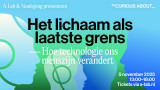
Hoe technologie en wetenschap ons menszijn veranderen
Wat betekent het om mens te zijn in de 21e eeuw, waarin mens en technologie steeds inniger zijn verstrengeld? Kunstmatige intelligentie, genetische modificatie, neurotechnologie en medische innovaties veranderen niet alleen de wereld om ons heen, maar ook de grenzen van wie wij zijn. Ons lichaam, ons bewustzijn, onze identiteit en zelfs onze ervaring van de werkelijkheid zijn in beweging.
Op 5 november verandert A Lab in een toekomst-experience waarin lichaam en geest samensmelten met technologie en wetenschap. Tijdens de zesde editie van Curious About… onderzoeken we hoe technologie ons menszijn verandert. Hoe het onze omgeving vormgeeft, welke relaties we aangaan, welke ethische grenzen op de proef gesteld worden en hoe technologie een verlengstuk wordt van jou als mens, of zelfs onder je huid kruipt? Een programma waarbij je je ogen uitkijkt en je aan het denken wordt gezet wie wij als mens zijn en worden nu technologische ontwikkelingen voorbij razen.
Nieuwsgierig? Meer info & tickets vind je op a-lab.nl.
Wat kun je verwachten?
Tijdens de interactieve demo’s door A Lab, ga op thema-expeditie langs ervaringen, kunst, verhalen, wetenschap en toekomstvisies:
... Dompel je onder in een zintuigelijke VR-ceremonie van Nemo Vos, waarin spiritualiteit, wetenschap, lichaam en tech samensmelten tot één ervaring
... Robin Coops presenteert een virtuele wereld vol verlangens, intimiteit en consent, en onderzoekt hoe onze digitale relaties ons menszijn raken.
... Muzikant en innovator Chagall geeft het digitale een ziel en laat met muziek lichaam en tech samensmelten
... Ervaar de NextMind technologie en stuur digitale systemen aan met je gedachten
... Hoe werkt dat eigenlijk na je dood, wil je dan doorleven in AI?
... Verken de grenzen van jouw lichaam tijdens een geleide meditatie.
... Krijg een inkijkje in de nabijheid en troost die een machine aan een mens kan geven.
... Ontmoet Phil, die dankzij een geïmplanteerde chip betaalt, reist en deuren opent met zijn hand.
... Ontdek hoe liefde en technologie samengaan met de karakters uit de Human docu AI Love.
... Onderga het rubber hand experiment zelf en ervaar hoe je brein lichaam en realiteit construeert
Keynotes & panel
Na afloop van de expeditie, ontvangen we vier keynote speakers en het panel op het podium.
... Johan Hoorn (Hoogleraar Sociale Robotica & AI) ontrafelt de ontwikkelingen door een technologische bril: wat gebeurt er al en waar bewegen we naartoe?
... Ajuna Soerjadi (Directeur Data-Ethiek, Jonge denker des Vaderlands en TED spreker) schijnt haar licht op ethische vraagstukken en grenzen: hoe raakt technologie mens en maatschappij?
... Marleine van der Werf (Filmmaker & Visual Artist) bevraagt in een intieme, zintuiglijke ervaring onze kwetsbare band met het lichaam en bewustzijn, met haar multidisciplinaire ‘Disembodied' project.
... De blinde Simon Dogger (prijswinnend ontwerper, van o.a. Dutch Design Award) neemt ons met zijn persoonlijke verhaal mee in hoe technologie en zintuiglijkheid elkaar kunnen versterken.
Het programma overzicht
12:30 - Inloop
13:00 - Opening
13:00 - Interactieve demo's door A Lab
15:30 - Keynotes & Panel
17:00 - Napraat & borrel
Meer info via a-lab.nl
Tickets via Eventbrite
Jorden van der Hoogt,
Strategy and Innovation Lead
at Cenex NL,
posted
E-Trucks: Is Trucking Still Hard to Electrify?

𝟭𝟬 𝘆𝗲𝗮𝗿𝘀 𝗮𝗴𝗼, 𝗵𝗲𝗮𝘃𝘆 𝘁𝗿𝘂𝗰𝗸𝘀 𝘄𝗲𝗿𝗲 “𝘁𝗼𝗼 𝗵𝗮𝗿𝗱 𝘁𝗼 𝗲𝗹𝗲𝗰𝘁𝗿𝗶𝗳𝘆.”
𝗡𝗼𝘄? 𝗙𝗹𝗲𝗲𝘁𝘀 𝗮𝗿𝗲 𝗽𝗿𝗼𝘃𝗶𝗻𝗴 𝘁𝗵𝗲𝘆 𝗰𝗮𝗻 𝘄𝗼𝗿𝗸 — 𝗯𝘂𝘁 𝗼𝗻𝗹𝘆 𝘄𝗵𝗲𝗻 𝗿𝗼𝘂𝘁𝗲𝘀, 𝗰𝗵𝗮𝗿𝗴𝗶𝗻𝗴, 𝗮𝗻𝗱 𝗼𝗽𝗲𝗿𝗮𝘁𝗶𝗼𝗻𝘀 𝗮𝗿𝗲 𝗶𝗻 𝘀𝘆𝗻𝗰.
On 𝟮𝟳 𝗔𝘂𝗴 2025 at 𝟭𝟬:𝟬𝟬 𝗖𝗘𝗦𝗧, we’ll break down exactly what works today, where the pain points still hurt, and how to electrify your fleet without disrupting your operations.
You’ll get:
• The biggest shifts in electric truck technology and adoption over the last decade
• Which fleets are running e-trucks successfully today — and where they still don’t fit
• The toughest operational and infrastructure hurdles (and why they persist)
• When e-trucks hit profitability based on TCO, range, and duty cycle
• A practical roadmap to start electrifying your fleet without disrupting operations
Speakers:
Tharsis Teoh, Smart Freight Centre — Perspective of the freight sector
Michael Ayres, Flexible Power Systems — Experience from live projects on depot charging
Rishabh Ghotge, Cenex Nederland — Live demo of KITE, a free tool for electrifying your truck fleets
Hosted by our favourite Sanne van Breukelen
Join us to cut through the noise and address the real barriers European fleets face.
Cenex, NextETRUCK, MACBETH Project, ALICE, Alliance for Logistics Innovation through Collaboration in Europe (ETP LOGISTICS), 2Zero , Connekt, Connectr - Energy innovation, ERTICO - ITS Europe, POLIS network, Niklas Schmalholz, Holly Nakatomi, Megan de Langen
Manon den Dunnen,
Strategisch specialist digitaal
,
posted
Hackathon Power of Europe @ Amsterdam/Oosterpark

Join 100 builders to fine-tune LLMs, build RAG and agentic systems — all using powerful, emerging European AI tech.
<em>This hackathon is brought to you by Tech Makers, Build Europe, and</em> AI for Good<em>.</em>
Power of Europe Hackathon
From fine-tuning LLMs to building next-gen RAG pipelines and agentic systems, this hackathon is your launchpad to experiment with the latest AI patterns using Europe's rich and often underexplored tech ecosystem.
<strong>Goal</strong>: build a working "AI demo" using European-made tech as much as possible, whether that’s RAG, smart agents, fine-tuned LLMs, or fresh AI ideas.
<strong>Demo</strong>: at the end of the day you will be given the opportunity to share what you built, what you learned, and your ASK: feedback, help, or just encouragement to keep you going!
Whether you're playing with open models, exploring modular architecture, or rethinking how AI tools are built and deployed, this is the place to connect with others shaping the future.
Let’s build the next wave: locally grown, globally relevant.
Manon den Dunnen,
Strategisch specialist digitaal
,
posted
Sensemakers Special on Digital Twins for Safety & How technology facilitates Extremism
This Wednesday we have 2 interesting speakers:
- Technical gamechangers for extremism
Nikki Sterkenburg, Professor Investigative Journalism Studies (VU) on how new technology facilitates and impacts extremism. - Digital Twins for safety during big events
Jan de Wit of the Safety Region walks us through the use of digital twins for safety during major events. A lot of technology was used during the Sail event last summer. Jan explains the chosen approach and the insights gained.
It starts at 19h in the OBA on the 6th floor (Forumzaal). You can rsvp via meetup or by sending an email to sensemakersams@protonmail.com. But our meetings are open to all so feel also free to just walk in.
Claudia van Swelm,
Communicator (onderzoeksafdeling Code)
,
posted
Digitaal hulpverleners gezocht - Waag Futurelab
Voor het vergroten van kennis en begrip over algoritmes is Waag Futurelab op zoek naar digitaal hulpverleners (in brede zin):
"Help je burgers in het omgaan met digitale tools en diensten? Krijg je in jouw werk te maken met vragen over o.a. algoritmes? Ben je digitale hulpverlener of heb je als professional te maken met algoritmische besluitvorming met gevolgen voor burgers? Waag Futurelab onderzoekt binnen Algo-Lit kennis en begrip van algoritmes bij deze doelgroepen. Ook peilen we de behoefte aan transparantie over algoritmes. Help je mee?
Ga voor meer informatie en de vragenlijst naar https://waag.org/nl/project/algo-lit/."
Claudia van Swelm,
Communicator (onderzoeksafdeling Code)
,
posted
29 juni deadline aanmelden Masterclass Netpolitiek

Ben je werkzaam in het digitale domein en wil je goed voorbereid aan de slag met de belangrijke maatschappelijke en politieke vraagstukken van onze tijd? De Masterclass Netpolitiek biedt jou als (toekomstige) besluitvormer in de informatiemaatschappij de kennis en handvatten die jij nodig hebt.
Technologie gaat niet alleen over bits en bytes, maar ook over macht en bestuur. Om onze informatiemaatschappij de komende jaren succesvol te besturen is stevige kennis over technologische ontwikkelingen cruciaal. In negen bijeenkomsten leer je over de invloed van het internet en de informatiesamenleving op alle facetten van de maatschappij en verken je theoretische en praktische handvatten voor digitalisering die de burger centraal stelt.
De Masterclass Netpolitiek wordt georganiseerd door Waag Futurelab, ISOC, Paul Suijkerbuijk en Sara Spaargaren, met aanvullende sprekers van o.a. Amnesty International, Bits of Freedom, Open State Foundation, PublicSpaces, Racism and Technology Center en SetUp.
Data: 9 maandagavonden van 6 oktober t/m 1 december
Locatie: De bijeenkomsten worden beurtelings in de Waag (Nieuwmarkt 4, Amsterdam) en online gehouden.
Kosten: 1950 euro (excl. 21% btw)
Kleinebeurstarief 195 euro (excl. 21% btw)
In aanmerkingen komen voor een kleinebeurstarief? Stuur bij je bestelling een korte motivatie mee.
Deadline aanmelden: 29 juni 2025 Het aantal plekken is beperkt, dus meld je zo snel mogelijk aan!
Amsterdam InChange,
Connector of opportunities
at Amsterdam InChange,
posted
Recap of Demo Day #28
On June 5th, we were welcomed at the Huis van de Toekomst (House of the Future) in Amsterdam South-east for our 28th Knowledge and Demoday! Former Amsterdam Smart City director Leonie van den Beuken hosted the event. It was a day full of enthusiasm, positive energy, and fresh insights.
In this article, we’ll give you a quick overview of the Knowledge Session, Work Sessions, and Pitches. Want to dive deeper? Read the full reports by our team members Noor, Pelle and Jill (linked below).
About our Demo Days
Demo Days are one of the key tools we use to stimulate innovation and foster connections between our partners and the broader community. The purpose is to showcase the progress of various innovation projects, ask for support, share challenges, and engage more partners to help take these projects to the next level. More information about the Demo Days can be found here.
Knowledge Session: Behavioural Change
Behavioural scientist Reint Jan Renes (Amsterdam University of Applied Sciences) delivered an inspiring session on behavioural change. Why do people, despite good intentions and awareness, continue unsustainable practices? And what does it really take to achieve lasting behavioural change, especially among more affluent groups? Read Jill’s full report here.
Work Sessions
Circular | Designing for Circularity in the Port of Amsterdam
This session addressed one of the key challenges of the circular transition: how can we make the Port of Amsterdam fully circular? The City of Amsterdam has set an ambitious goal to become fully circular by 2050. A transformation that includes the port. Achieving this will require deep collaboration and innovation. Read Noor’s full report here.
Mobility | From Policy to Practice: Inclusive Design Ambitions of the Amsterdam Transport Authority
Together with a diverse group of network partners, we explored inclusive design in mobility projects. Inclusive mobility is a key theme in regional policy, based on the idea that everyone — regardless of age, income, disability, gender, or background — should be able to travel safely and comfortably. This session aimed to co-create an initial action plan for implementing inclusive design principles in mobility. Read Pelle’s full report here.
Energy | How to Keep Our Mechanics on the Move?
This session focused on a major challenge in the energy transition: grid congestion, and specifically, how to ensure grid maintenance workers can continue operating effectively. Alliander’s Operation 2.0 team is exploring innovative ways to work smarter, faster, and more flexibly to keep up with the demands of the transition. Read Noor’s full report here.
Digital | Transformation Canvas
In the Digital work session, the spotlight was on the Transformation Canvas: a powerful tool to turn complex societal challenges into actionable strategies. Ocean Conijn from the Digital Society School guided participants through the framework, using the example of how data could support healthier eating habits among students. Read Jill’s full report here.
Pitches
We also featured a series of inspiring pitches from innovators within our network. Here's a quick look at the topics presented:
- Gocimo – Electric scooters with a smart battery-swapping system
- Amsterdam University of Applied Sciences – Design-based research into Civic Protocol Economies
- Interdisciplinary Graduation Group | Zero Emission Urban Logistics – Research outcomes
- VU Amsterdam Students – Living, Learning Networks in Motion
- Energy Lab Southeast | LIFE Project
Noor Veenhoven,
Program manager energy & circularity
at Amsterdam InChange,
posted
Demoday #28: Designing for Circularity in the Port of Amsterdam

During Demoday #28, we focused on one of the key challenges in the circular transition: how can we make the Port of Amsterdam fully circular?
The Amsterdam port is one of the largest in Europe. It functions as a major energy hub, where fossil fuels still play a central role, and as an industrial hub, where massive flows of raw materials pass through. The City of Amsterdam has set the ambitious goal of becoming fully circular by 2050. This means the port must transform as well. This is a complex and far-reaching task that requires collaboration and innovation.
In this work session, we zoomed in on circular design: how can we make products and processes circular from start to finish?
A closer look at the port
James Hallworth, Commercial Manager at Port of Amsterdam, opened the session by taking the group on a tour through the world of the port. Located in the western harbour area, the port has two main responsibilities. First, it ensures the smooth and safe handling of all maritime traffic on behalf of the City of Amsterdam. Second, it manages and develops the land and industrial areas around the harbour.
To tackle circularity, Port of Amsterdam applies industrial ecosystem thinking. In nature, waste does not exist, and the same principle should apply here. The port aims to build collaborative networks between companies, where waste flows from one company becomes raw materials for another. There is already significant activity around recycling and recovery, but more can be done in higher-value strategies on the R-ladder, such as repurposing, remanufacturing, and refurbishment. Circular by design is a key concept in this shift.
The port is transitioning from measuring success in tons to measuring added value. This shift also means thinking differently about space: circular systems require space to receive, process, and recover valuable materials from waste streams.
Getting hands-on with circular design
Creating a fully circular production process is easier said than done. That’s why we worked through two real-world cases: construction materials and e-bikes. Participants split into groups and explored what a truly circular production process might look like. We also explored the potential role the port could play as an enabler of circular supply chains.
Some key takeaways from the session:
• Material passports: A digital document containing material properties and origin can greatly simplify recycling and reuse.
• Monomaterials: Products made from a single type of material are much easier to separate and recycle at the end of life.
• Smart synergies: Mapping which companies can use each other’s waste flows as input can unlock huge circular potential.
• Financial incentives: Right now, circular processes are often more expensive than linear ones. Smart financial mechanisms could help bridge that gap.
• E-bike challenges: In the case of e-bikes, batteries were flagged as a challenge. Recycling them is still very difficult, and since they are mostly produced outside of Europe, it’s hard to have control over the production process.
This session invited participants to take a step back and view products through a circular lens. The port has the potential to become a key player in the circular transition, but to get there, it will need ideas, insights, and input from across the network.
<strong>Do you have ideas on how the Port of Amsterdam can become more circular? Or would you like to contribute to future sessions? Get in touch with Noor at noor@amsterdaminchange.com. A big thank you to James Hallworth from Port of Amsterdam for bringing this challenge to the network, and Yanti Slaats (Amsterdam University of Applied Sciences) for moderating the session.</strong>
Pelle Menke,
Communications and Programme officer Mobility
at Amsterdam InChange,
posted
Demoday #28: From Policy to Practice: Inclusive Design Ambitions of the Amsterdam Transport Authority
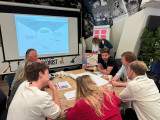
On the 5th of June, during the 28th Knowledge and Demo Day, we explored the topic of Inclusive Design in the context of mobility projects together with a diverse group of network partners. Iris Ruysch introduced the theme on behalf of the Amsterdam Transport Authority (Vervoerregio), while David Koop and Lotte de Wolde from our knowledge partner Flatland facilitated the session format, moderation and visual notes.
The ambition of the Amsterdam Transport Authority
The Amsterdam Transport Authority is responsible for public transport across fourteen municipalities in the region and is working towards a mobility system that enables people to travel quickly, safely and comfortably by public transport, bicycle or car. In addition to organising and funding public transport and investing in infrastructure, the Authority actively contributes to broader societal goals such as sustainability, health and inclusivity.
Inclusive mobility is one of the key themes within the wider mobility policy. The central principle is that everyone – regardless of age, income, disability, gender or background – should be able to travel well and comfortably throughout the region. This calls for a mobility system that is accessible, affordable, appropriate, socially safe and welcoming.
The aim of the session on 5 June was to work with the network towards an initial action plan for applying inclusive design principles in mobility projects. Iris is keen to ensure that the ambitions around inclusivity are not only stated in policy and vision documents but are truly embedded in the organisation – from policymakers to implementation teams.
Session set-up
After an introduction by Iris on the context and ambitions within the Transport Authority, we got to work. In small groups, participants explored the profile of the implementing civil servant (using a persona canvas) and considered desirable changes in approach; in terms of attitude, skills and collaboration.
We then used the Inclusive Design Wheel to examine how existing programme components of the Authority could be made more inclusive. In pairs, we tackled themes such as accessible travel information, social safety at stations (specifically for women), and improving bicycle parking facilities.
The Inclusive Design Wheel is an iterative process model that supports the structural integration of inclusivity into design and policy projects. The model emphasises collaboration, repetition, and continuous learning. It consists of four phases:
- Explore: Gather insights about users, their needs, and potential exclusion.
- Create: Develop ideas, concepts, and prototypes that address inclusive needs.
- Evaluate: Test whether the designs are inclusive, collect feedback, and make improvements where necessary.
- Manage: Ensure shared understanding, set goals, engage stakeholders, and embed the process.
Outcomes and insights
While the persona profiles were being developed, I observed the group discussions and noted several important insights to take forward in the development of the action plan:
- Awareness and concrete translation: Implementation teams often already have an intrinsic motivation to contribute to inclusivity goals set in policy. However, they may not always realise how their day-to-day work can support those goals. It’s important to continuously ask the question ‘How, exactly?’. Tools like checklists, templates and practical examples can support this translation from policy to practice.
- Flexible guidelines and not ‘extra work’: Given the differences in scale, pace and content of projects, guidelines need to be flexible. There must also be sufficient room in terms of time and budget. Most importantly, these guidelines and action plans should feel supportive, not like extra rules or bureaucracy. Too many rigid frameworks can backfire.
- Interaction between policy and implementation: There is a need for more two-way communication. Implementation teams want to be involved early in policy development, especially when they will be the ones carrying it out. They also want opportunities to reflect with policymakers on whether policy is being implemented as intended. This allows for timely feedback and course-correction based on real-world experience.
- An Inclusive Design mindset: Beyond sharpened policy documents and a stronger focus on the end user, Inclusive Design also requires a mindset – one that is inquisitive and reflective. Embedding this within the organisational culture will require more than just an action plan.
What’s next
Iris collected valuable input to kick-start the development of the action plan, and participants gained a better understanding of the Amsterdam Transport Authority, the principles of Inclusive Design, and what it takes to move from policy to implementation. This summer, a trainee will start at the Transport Authority to further develop this topic and the action plan. The session, this report, and Flatland’s visual notes provide a strong foundation to build on. We’ll be meeting with Iris and David to explore how we can support this follow-up.
Would you like to learn more about any of the topics or developments mentioned in this report? Feel free to email pelle@amsterdaminchange.com.
Noor Veenhoven,
Program manager energy & circularity
at Amsterdam InChange,
posted
Demoday #28: How to keep our mechanics on the move?
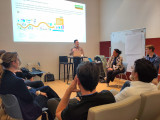
On the 5th of July, during Demoday #28, we zoomed in on one of the pressing challenges facing the energy transition: grid congestion, and more specifically, how to keep the people who maintain the grid moving efficiently.
Grid congestion is a serious and growing concern for grid operator Alliander. It is therefore essential to speed up the grid reinforcement as much as possible. Alliander’s Operation 2.0 team is exploring innovative ways to work smarter, faster, and more flexibly to keep pace with these developments.
Their efforts focus on three tracks:
• Alleviating staff shortages by training office employees to occasionally support fieldwork.
• Exploring technologies like advanced ground radar to get better insights into underground assets.
• Improving the logistics of supplying mechanics to ensure they have the right tools, in the right place, at the right time.
This last track was the main focus of our work session.
Inefficient supply of mechanics
Logistics experiences show that mechanics collect materials inefficiently when supplying their vans and jobs, resulting in stock corrections, less control over stock, unnecessary work for logistics staff, and valuable mechanic hours being lost, which leads to less execution work. A few key problems stood out:
• Supplies are scanned inconsistently, so the system doesn’t reflect what is actually in stock.
• Every van is different, with a custom layout that suits the preferences of its mechanic.
• The work itself is unpredictable, which makes standardised restocking difficult.
• With a transition to smaller electric vans, space is becoming even more limited.
A simple optimisation of the process is not enough, especially without considering the human element. For many mechanics, a visit to the supply centre is more than just logistics. It is a moment of connection, a short break from the road, or simply a chance for a good coffee.
Ideas from the network
In groups of four, we brainstormed creative ideas to improve the supply of Alliander vans while keeping the needs and routines of mechanics in mind.
Some highlights:
• Peer-to-peer van inspiration: Let mechanics share the layout of their vans with colleagues. They can exchange best practices and take pride in an efficient setup. Adding a bit of gamification might boost motivation even more.
• A mobile supply service: A supply van could drive around to restock mechanic vans, reducing the need to visit the supply centre. However, this might remove the social element of taking a break with colleagues.
• Smarter routing: Track the location of mechanics only in relation to nearby grid faults. This way, the closest available mechanic can respond without feeling like their movements are constantly being monitored.
• Package-based resupply: Inspired by delivery service Picnic, mechanics could exchange complete “supply packages” instead of picking out materials individually. Collaborating with wholesale suppliers could reveal more useful insights.
• Automatic stock tracking: Tag all materials with RFID chips and use sensors installed in the door of the van to register what is removed from the van. This eliminates the need for manual scanning and reduces the chance of mistakes.
Do you have a bright idea to improve how mechanics work? Let us know in the comments or send a message to Noor at noor@amsterdaminchange.com.
A big thank you to Thomas Hoekstra and Iris van der Zanden from Alliander for bringing this challenge to the network, and to Chantal Inia from Royal HaskoningDHV for moderating the session.
Teska Drosten,
Communicator
at Waag,
posted
Waag Open: Electric Garden
In de hoop dat technologie ons uit de klimaatcrisis redt, worden er miljoenen geïnvesteerd in technologieën op het gebied van kunstmatige intelligentie. Tegelijkertijd genereert de hele IT-industrie nu al 900 Megaton aan CO2 per jaar. Dat is zeven keer zoveel als de uitstoot van heel Nederland in 2023. Technologische innovatie en een gezond ecosysteem lijken niet samen te gaan. Kunnen technologie en natuur samenwerken bij het redden van onze planeet?
Kunstenaar Sunjoo Lee experimenteert in haar project ‘Electric Garden’ met een elektriciteitsproducerende tuin. Zolang het ecosysteem in haar tuin bloeit, kan elektriciteit worden opgewekt. Tijdens deze Waag Open in juli maken we een eigen Electric Garden in de Waag. In een boeiende workshop neemt Sunjoo je mee in de wereld van regeneratieve technologie en leer je hoe de natuur als duurzame energiebron kan fungeren.
Programma
| 19:15 - 19:30 uur | Inloop |
|---|---|
| 19:30 - 19:45 uur | Welkom & introductie |
| 19:45 - 21:30 uur | Workshop Electric Garden |
Over Electric Garden
Electric Garden verkent op creatieve wijze de mogelijke samenwerking tussen natuurlijke ecosystemen en digitale systemen. De tuin produceert elektriciteit via het metabolisme van anaerobe bacteriën die in natte grond leven, met behulp van een technologie die Microbial Fuel Cells wordt genoemd. Elke container werkt als een batterij en is uitgerust met elektroden die de elektronen oogsten die door de bacteriën worden uitgezonden. De planten en insecten in de tuin voeden de bacteriën. Zolang het ecosysteem bloeit, kan elektriciteit worden opgewekt.
Over Sunjoo Lee
Sunjoo Lee is een interdisciplinair kunstenaar. Haar werk bevindt zich op het snijvlak van kunst, technologie en ecologie. Ze is gevestigd in Nederland en Zuid-Korea en is gefascineerd door het gebruik van elektronica en digitale hulpmiddelen die het menselijk belang overstijgen. In haar werk verkent ze onderwerpen als meer dan menselijke filosofie, emergentie, biomimicry, toekomstige vormen van symbiose en permacomputing.
Waag Open
Elke eerste donderdagavond van de maand opent Waag haar deuren! Kom langs om te discussiëren en te doen. Want we gaan niet alleen in discussie over maatschappelijke thema's en de toekomst – je leert daarnaast ook altijd iets praktisch. Iets dat je altijd al hebt willen uitproberen, zoals de 3D-printer in het FabLab, of juist iets dat je nooit had verwacht, zoals uitpluizen hoe DNA in elkaar zit in ons biotech-lab. Waag Open vindt plaats in de maakplaatsen op de eerste en tweede verdieping van het historische Waaggebouw op de Nieuwmarkt.
Toegankelijkheid
Mocht je krap bij kas zitten en wel graag aan dit evenement willen deelnemen, neem dan contact op met sanna [@] waag [punt] org.
Jill Vink,
Communication
at Amsterdam InChange,
posted
Demoday #28: Transformation Canvas
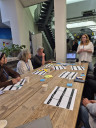
At the 28th Knowledge and Demo Day on July 5, the ‘Digital’ workshop focused on the Transformation Canvas: a powerful tool for translating complex societal challenges into actionable strategies for change. Ocean Conijn from the Digital Society School guided participants through the framework, using the question of how data can support healthier eating habits among students as a real-world case study.
What is the Transformation Canvas?
The Transformation Canvas helps teams and organisations break down societal or systemic issues into five essential components:
- Situation – What is the current context?
- Transformation – What does the desired change look like?
- Outcome – What are the best- and worst-case scenarios?
- Change – What shift do we want to see (from – to)?
- Research Question – What is the central question?
This structure provided a clear framework during the session, where participants worked on a self-selected case study.
From Supermarket Data to Behavioural Change
The session began with a participant's question: supermarkets hold valuable data on purchasing behaviour but don’t share it due to commercial interests. How can we shift this mindset?
As the discussion progressed, the focus shifted from “What do we want to know?” to a more fundamental question: “Why do we want to know it?” Students often eat unhealthy when they are at school. The central challenge became: how do we break this pattern using both data and behavioural insights?
What Did We See?
Current Situation:
• Supermarkets hold crucial data on eating behaviour.
• Municipalities want to use this data to shape health policies.
• But there are concerns around privacy, ownership, and commercial interests.
Desired Transformation:
• Not just access to data, but a shared sense of urgency among all stakeholders.
• Healthy eating becomes a natural part of daily life (for students and companies).
Scenarios: From Worst to Best Case
Worst case:
• No access to usable data
• Increasing resistance from businesses
• Poor representation among participants
• Data turns out to be unreliable or incomplete
Best case:
• Open and secure data sharing
• Real behavioural change among students
• Supermarkets adapt their product offerings
• Companies take the initiative in the food transition
From Idea to Action: Creative Solutions
Participants were challenged to imagine solutions they could start building tomorrow. Some ideas included:
• “Snack Rehab Clinic” – A playful but serious intervention where individuals gain awareness of their eating behaviour and voluntarily share data to break habits.
• Collaboration with supermarkets like Albert Heijn via the Bonus app – By using personal purchase data, users could be ‘nudged’ toward healthier choices, with transparency and rewards at the core.
There wasn’t enough time during the workshop to complete the entire canvas, but participants got a preview of how the tool works in practice. Are you curious about the Transformation Canvas or interested in using it in your own work? Send us a message, and we’ll connect you with Ocean from the Digital Society School.
Amsterdam InChange,
Connector of opportunities
at Amsterdam InChange,
posted
Knowledge and Demo Day #28: Behavioural Change
Why do people, despite good intentions and awareness, continue to engage in unsustainable behaviour? And what does it really take to bring about lasting behavioural change — especially among affluent groups? These questions were central to an inspiring session by behavioural scientist Reint Jan Renes (Amsterdam University of Applied Sciences) at our 28th Knowledge and Demo Day.
Record-breaking heat, floods, avalanches, and prolonged droughts — alarming news stories bombard us daily. The planet is in crisis. And yet, we continue with behaviours that harm the climate and increase our ecological footprint.
Why don’t we change?
Over 75% of Dutch citizens regularly express significant concern about climate change. Yet these concerns rarely translate into real, lasting behavioural shifts. The climate is changing—so why aren’t we?
“Many people agree that ‘something’ needs to be done about climate change,” says Reint Jan Renes. “But that willingness drops sharply the moment plans become concrete.” Few are prepared to take real responsibility. This leads to a growing gap between words and actions.
Who should act? We should!
The richest 10% of the global population is responsible for roughly half of all CO₂ emissions. Meanwhile, the poorest 50% contribute just 8%. So the responsibility falls squarely on us—to address the problems we have helped create.
Yet we don’t act. We feel entitled to behaviours that heavily burden the climate: eating meat daily, regularly buying new clothes or gadgets, taking frequent flights. We know it’s harmful to the planet—and we do it anyway. Why?
Coping strategies
We’re remarkably good at justifying our actions: “What difference does one time make?” Or: “Everyone else is doing it.” “My neighbour is much worse than I am.” “I already do some good things—don’t expect me to do more.” And: “Scientists keep changing their minds. I read somewhere it’s not that bad after all.”
Sound familiar? Then you’ve likely used some of these coping strategies too.
This lack of personal ownership leads to a “steady state”—a status quo in which everyone looks to someone else to take the first step. Many believe governments should lead, since they have the authority to initiate and enforce change. But research shows that governments often take a surprisingly passive role in social transitions.
Speak up and be visible
So what does help? People are more inclined to adopt sustainable behaviour when they hear about the concrete actions others are taking. Do you eat (less) meat? Take your bike or public transport? Talk about it positively. Start conversations about climate-harmful behaviours.
Make your actions visible. This has an even greater impact when individuals and organisations regularly appear in the media. It helps correct the false belief that few people care about the climate—or that you're among a rare few making an effort.
Talking openly about climate-positive behaviour is crucial for shifting social norms. Demonstrating it in everyday life is inspiring. Both can act as powerful drivers to accelerate the transition. And that’s vital. Especially in light of another research finding: Climate-friendly behaviour makes us happier.
Luka de Koe,
Technical Specialist Circular Mobility
at Cenex NL,
posted
Urban Clean Air Roundtable
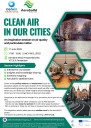
I'm reaching out to warmly invite you to join an upcoming roundtable we’re organizing on Tuesday June 17th focused on clean air in cities (Flyer is attached).
Given Amsterdam InChange's strong role in engaging professionals and communities in environmental monitoring, we believe your perspective would be highly valuable in the conversation. We also see this as a great opportunity to share your work and connect with other researchers, policy makers, and civil society actors active in the clean air space.
The content is a round table session, in which we share what is being worked on and what possible future developments are from different perspectives. The program for the day:
- 11:00 Welcome
- 11:15 Introduction
- 11:30 Presentations on current research/ policies
- 12:45 Lunch
- 13:30 Brainstorm: what-else-can-we-do-and-who-would-we-need-for-that?
- 14:45 Closing up with ten-agreements-plan
We still have a few speaking opportunities available, so if you or someone from your team would be interested in presenting your work or simply joining the discussion, we’d be delighted. Please feel free to email me or my colleague Sanne (sanne.van.breukelen@cenexgroup.nl) directly if you'd like more details or if you’d like to participate.
A Lab,
Where Curious Works
at A Lab Amsterdam,
posted
A Lab Open Huis. Met exposities, pitches voor een positieve toekomst, live muziek, dans en theater, workshops en meer!
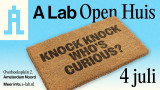
Laat je nieuwsgierigheid de vrije loop tijdens het <strong>A Lab Open Huis</strong>. Een creatief en innovatief festival voor alle nieuwsgierige Amsterdammers die in deze turbulente tijden waarde hechten aan kunst & cultuur, duurzaamheid en sociale innovatie.
Kom kijken hoe meer dan 350 members in onze broedplaats werken aan een positieve toekomst. Met een programma vol exposities, live muziek, kunst, pitches, theater, fotoreportages, workshops, interessante ontmoetingen en meer! Kinderen? Neem ze vooral mee, het is voor iedereen een feestje!
Ontdek nieuwe ideeën, ontmoet makers en verken het live programma. Dwaal rond en laat je verrassen door wat je tegenkomt, of volg een van de inspirerende routes die speciaal zijn samengesteld langs de thema’s waar A Lab members aan werken. Er is een (digitale) kunst & cultuurroute, een duurzaamheidsroute, een sociaal maatschappelijke innovatieroute en ga voor een mix van activiteiten in de kidsroute.
Bekijk het volledige programma met timetables komende tijd op de website, maar een sneak peek is natuurlijk altijd leuk. Laat je meevoeren door livemuziek – van opkomend raptalent tot jazzy klanken – en ontdek unieke ervaringen zoals een levende algenexpo, verticale dans op de binnentuinmuur en interactieve datavisualisatie. Luister naar korte, inspirerende talks over een zelfredzame toekomst, stap in een Kanta vol verhalen over Amsterdam Noord, of scoor iets moois in de A Lab pop-up store. Geniet van wereldse smaken van de restaurants van het nieuwe Maritim Hotel, bewonder kunst van o.a. jonge makers, draai aan een meteorologisch rad of ga zelf aan de slag in een escape room of met je eigen digitale kunst. En voor filmliefhebbers: struin door Izzy’s Videotheek voor verborgen parels die je nergens kunt streamen.
Het event is gratis, maar reserveer wel je gratis ticket via deze link.
Stay up to date
Get notified about new updates, opportunities or events that match your interests.
Set up preferences

