Stay in the know on all smart updates of your favorite topics.
Amsterdam InChange,
Connector of opportunities
at Amsterdam InChange,
posted
How to move the masses?
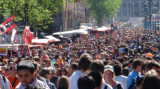
Hoe zorgen we ervoor dat grote evenementen in 2020, zoals SAIL, goed te bereiken zijn? De Dutch Grand Prix in Zandvoort, UEFA 2020 en SAIL 2020 in Amsterdam. Verschillende grote, internationale events vinden in 2020 plaats in Nederland. Er worden honderdduizenden mensen verwacht die naar deze evenementen komen. Hiervoor moet een stad of gebied om kunnen gaan met een grote massa mensen. Hoe zorgen we dat grote evenementen bereikbaar zijn, en welke manieren van reizen zijn daarvoor beschikbaar? Welke innovaties kunnen hierbij helpen?
Een van de oplossingen om bereikbaarheid te garanderen is crowd monitoring. De Johan Cruijff ArenA ontwikkelde het Mobility Portal. Hiermee is het mogelijk om gefragmenteerde verkeersinformatie in het ArenAPoort-gebied op eenduidige manier te presenteren. Daarmee willen ze het verkeer beter spreiden. Wat is het precies? De Mobility Portal is in feite een online platform waarop de bezoekers alles over het vervoer kunnen vinden van en naar het gebied toe. Je voert je postcode in, dan weten zij waar je vandaan komt. Op basis hiervan meten ze de verkeersintensiteit en kunnen ze mensen via nieuwe routes naar het gebied laten komen. Als resultaat hopen ze dat dit opstoppingen in het verkeer tegengaat.
Maurits van Hövell, consultant Mobility & Environment bij de Johan Cruijff ArenA, staat op het podium tijdens ons programma in Pakhuis de Zwijger. Maurits zal in gesprek gaan over de voorbereidingen van EURO 2020 qua bereikbaarheid en hoe de mobility portal ook bij andere grote evenementen een rol kan spelen.
Wil je meer weten over het Mobility Portal? Bekijk dan het project op ons platform: <https://amsterdamsmartcity.com/projects/mobility-portal-co011ghp>
Zien we je dinsdagavond 14 januari in Pakhuis de Zwijger? Meld je dan nu gratis aan: <https://dezwijger.nl/programma/how-to-move-the-masses>
Darina Khanina,
Business Development
,
posted
Get Axis In-Car Experience Report!
Axis Innovation team is very excited to share our latest industry report about the future of the In-Car Experience. Based on our firsthand experience working with leading automotive companies and startups since 2013, the report analyzes the challenges and massive opportunities of the in-car experience, offers our predictions for the future, and shares our latest thinking on how all sides of the mobility ecosystem can position themselves for success with the in-car experience.
Thanks to our Dealflow Manager Jason Weiss for working on this for months! Click here to get the report for free >> https://reports.axisinnovation.com/in-car
If you have any thoughts or questions, don't hesitate to reach us by email info@axisinnovation.com
Folkert Leffring,
Digital Media Manager
,
posted
Fast Facts: Electric vehicle charging
When rolling out electric charging infrastructure, cities need to weigh options like voltage, charging time and the investment level.
So what are the considerations and what cities are leading the way?
Anna Paulides,
Projectleider Stadslogistiek
at PostNL,
posted
Klimaat, steden en inwoners wachten niet tot we 'uitvergaderd' zijn. Zero emissie en congestie-arme stadslogistiek, wij gaan het gewoon doen!
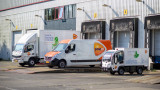
Steden slibben dicht en de overheid en het Klimaatakkoord dwingen bedrijven tot duurzamere keuzes. PostNL wil 25 steden emissievrij bevoorraden in 2025. Om daar te komen vergadert Anna Paulides zich suf, want niet ieders belangen en doelstellingen komen overeen.
Anna Paulides is nog maar 27 jaar oud en nu al projectleider stadslogistiek bij PostNL. Haar missie is logistiek voor te bereiden op de steden van de toekomst. De grootste uitdaging daarbij is: de duurzame last mile in stadscentra in de hele Benelux. Het PostNL-programma Stadslogistiek startte zo’n twee jaar geleden, met de ambitie om in 2025 in 25 steden emissievrij en congestie-arm te bezorgen. Welke 25 steden dat precies worden, is nog niet duidelijk. Paulides: “Mijn rol bestaat er voor een groot deel uit dat ik de dialoog voer met alle stakeholders. Dat zijn overheden, gemeenten, bewoners, kennisinstellingen, brancheorganisaties, marktleiders en concullega’s. Het is belangrijk dat de neuzen dezelfde kant op staan, maar met zo veel verschillende belangen en doelen is dat soms nog een hele puzzel.”
Lees meer: <https://fleet-mobility.nl/magazines/magazines/2019/editie-4-2019/21149-de-natuur-wacht-niet>
Folkert Leffring,
Digital Media Manager
,
posted
On-demand electric ride share launched in Amsterdam
Ride-share operator ViaVan has partnered with Shell to launch an on-demand electric service in Amsterdam.
The project will combine Shell’s fast-charging infrastructure in the Dutch capital with ViaVan’s electric vehicle fleet to improve routing information to available chargers nearby.
Read the full article here:
AMS Institute,
Re-inventing the city (urban innovation)
at AMS Institute,
posted
[Long-read]: The quest for mobility solutions
We don’t need to look that far in the future to see the mobility challenges of Amsterdam. The number of people visiting, living and working in Amsterdam continues to rise and big events such as EURO2020 and SAIL2020 will have a significant impact.
According to the most recent population forecast, the city of Amsterdam will have more than 1 million inhabitants in 2040 and tourism is expected to grow from 18 million people per year in 2018 to 23 million people per year in 2023. Inevitably, issues such as congestion, the misalignment of the supply and demand for public transport and air pollution are placing growing pressure on the city.
Given these competing demands for the use of public space, Amsterdam is urgently seeking innovative solutions for sustainable, reliable and inclusive mobility. The overall goal is to keep the city liveable and accessible and its citizens healthy and mobile.
Celebrating the 5-year anniversary of AMS Institute, we are launching a series of long-reads. In these long-reads, we attempt to untangle the urban challenges, celebrate successes, collaborations, steps forward, solutions we worked on and the impact we've created over the past 5 years - together with our partners.
Continue reading here: https://www.ams-institute.org/news/innovative-quest-smart-mobility-solutions-long-read/
Anonymous
posted
Hely Start in December Zuidas' Eerste MaaS-dienst.

Medio december 2019 opent Hely haar tiende mobiliteitshub aan het Summertime complex, wat het eerste Mobility as a Service concept op de Zuidas zal zijn. Met een Hely abonnement kan de gebruiker diverse soorten deelvervoer van verschillende aanbieders huren via één app. Hierdoor kan de consument ieder moment op zijn ideale manier van a naar b komen.
Hely is de snelst groeiende MaaS-aanbieder van Nederland, met negen mobiliteitshubs in zes grote steden binnen anderhalf jaar. In december dit jaar opent Hely haar tiende hub op de Zuidas. Deze Hely Hub zal uitgerust worden met diverse soorten deelvervoer van Hely’s mobiliteitspartners, waaronder MyWheels en Urbee. Zo komen er verschillende soorten auto’s, e-bikes en elektrische bakfietsen. De diversiteit aan vervoermiddelen en de directe verbinding met het openbaar vervoer helpt de reiziger met het samenstellen van zijn ideale reis, zonder gedoe met verschillende apps en accounts.
ALL-IN
Een Hely abonnement geeft toegang tot alle vervoermiddelen en hubs van Hely binnen dezelfde stad. In Amsterdam bijvoorbeeld heeft Hely naast de Zuidas nog twee hubs, welke allemaal toegankelijk zijn met hetzelfde abonnement. Naast een kleine abonnementsprijs van €4,95 per maand betaalt de gebruiker per vervoermiddel een vast uurtarief. In tegenstelling tot veel mobiliteitsaanbieders, biedt Hely een all-in concept: geen borg, geen extra kilometer- of servicekosten en brandstof is altijd inbegrepen. Zo weet de gebruiker altijd waar hij aan toe is, ongeacht het vervoermiddel dat hij kiest.
MAAS VOOR BEDRIJVEN
Naast MaaS voor de consument, biedt Hely ook een zakelijk product aan: Hely For Business. Met een Hely For Business account kan een bedrijf al haar medewerkers van mobiliteit voorzien en toch besparen op kosten en CO2-uitstoot. Met deelvervoer worden de voertuigen namelijk veel efficiënter ingezet, waardoor minder vervoermiddelen en parkeerplekken nodig zijn. Bovendien kan dit bedrijven ook helpen met af komen van vele langdurige leasecontracten en stilstaande wagenparken. Met de komst van Hely Hub Zuidas hoopt Hely nog meer bedrijven te kunnen helpen met het efficiënter en duurzamer inrichten van hun mobiliteit.
Anonymous
posted
SAE International Goes “Micro” to Expand View of Mobility
At SAE International, our charge is to embrace opportunities and tackle challenges presented by the evolving mobility landscape. As new players emerge in the mobility space that promote free and easy movement, we’ve expanded our view of mobility to include micromobility.
Leveraging recent strides in vehicle and communication technologies, micromobility aligns with SAE’s commitment to advancing mobility knowledge and solutions for the benefit of humanity. SAE is a neutral party that convenes mobility communities to foster innovation in support of the safe and sustainable deployment of mobility solutions.
Ananda Groag,
mobility expert
,
posted
Oproep aan alle mobiliteitsvrouwen!
Diverse perspectieven op mobiliteit zijn hard nodig om samen tot goede toekomstbestendige oplossingen te komen. Vind je ook dat een congres programmering met een all-male line-up wel heel 2018 is? Samen worden we beter zichtbaar en vindbaar. Doe je mee? Er staan al 86 vrouwen te schitteren in onze 'wall of fame' en er zijn 108 vakvruowen onderdeel van onze LinkedIn groep. Meld je aan bij het [W]heels Netwerk!
En de mannen? Wordt ambassadeur, fan, spread the word, volg @wheelsnetwerk op Twitter, activeer je vrouwelijke netwerk en weiger vooral te spreken als er geen diversiteit aan sprekers is.
Folkert Leffring,
Digital Media Manager
,
posted
How Amsterdam is learning from Uber's aggregate data
In July Amsterdam signed a ‘social charter’ with ride-hailing operator Uber, following a series of high-profile accidents involving its drivers in the Dutch capital last winter.
This, and more, was discussed at the City Leadership Forum in Vienna.
Anonymous
posted
Tweede multimodale mobiliteitshub geopend in Amsterdam Noord
Slimme mobiliteit heeft de toekomst en steeds meer wordt er geïnvesteerd in mobiliteitshubs. Een mulitmodale mobiliteitshub gaat nog een stapje verder en beperkt zich niet tot alleen deelauto’s, fietsen of -scooters; vrijwel iedere soort deelvervoer is hier te vinden. Deelvervoer aanbieder Hely opent aan de lopende band deze multimodale mobiliteitshubs binnen grote steden in de randstad. Hoewel het concept nog relatief onbekend is, zijn de hubs een groot succes bij omwonenden. Begin september werd zelfs de tweede Hely Hub in Amsterdam Noord beschikbaar gesteld.
HUH, HELY HUB?
Deelvervoerconcepten als car2go, felyx en greenwheels kennen de meeste mensen wel. Je zoekt een beschikbaar deelvervoermiddel in de buurt en zet hem na je rit weer op een willekeurige plek terug. Bij Hely werkt dit grotendeels hetzelfde, alleen haal je het vervoermiddel altijd op in de Hely Hub en zet je hem ook weer terug in dezelfde Hely Hub. Op deze manier weet je altijd zeker waar je de deelvervoermiddelen kunt vinden en grijp je niet mis. Daarnaast is een Hely Hub een verzamelplek voor verschillende soorten deelvervoer. Je vindt hier zowel e-bikes, elektrische bakfietsen, als diverse soorten deelauto’s. Alle vervoermiddelen kunnen gebruikt worden met één app. Dit concept is de kern van mulitmodale mobiliteit.
VRAAG NAAR MULTIMODAAL DEELVERVOER STIJGT
Niet alleen consumenten willen een betere oplossing voor hun mobiliteit, ook vanuit bestuurlijk Nederland wordt steeds meer aandacht besteed aan multimodaal deelvervoer en MaaS als oplossing voor vele maatschappelijke uitdagingen. Een recent voorbeeld is de stikstof uitspraak van de Raad van State, wat ons dwingt om de manier waarop we ons vervoer regelen drastisch te veranderen. De enige duurzame oplossing is om minder auto’s op de weg te krijgen, maar toch mobiel te blijven. In het onderzoek van ABN AMRO werd het deelvervoer concept van Hely als serieus potentieel alternatief genoemd. Eén deelauto vervangt namelijk tot wel 11 personenauto’s, wat niet alleen helpt met de verkeersdrukte, maar ook met het verlagen van de parkeerdruk in steden. Bovendien betekent minder auto’s en meer duurzame alternatieven, ook minder CO2-uitstoot en minder gebruik van fossiele brandstoffen. Dit alles bij elkaar opgeteld maakt dat de Nederlandse overheid evenals de gemeente Amsterdam een ruim budget heeft uitgetrokken om MaaS-initiatieven als deze van de grond te krijgen.
HELY IN AMSTERDAM
Beide Hely Hubs bevinden zich in Buiksloterham, in Amsterdam Noord. De hub aan de Klaprozenweg is open voor iedereen. Hier staan meerdere elektrische auto’s, maar ook reguliere stadsauto’s. Voor een laag tarief vanaf €0,13 per minuut zijn de deelauto’s te huur. Hierbij zijn alle kosten voor brandstof en kilometers altijd inbegrepen, en betaal je per kalenderdag rijden voor slecht 6 uur max. Hely wil met deze competitieve prijsstelling duurzaam deelvervoer toegankelijk maken voor iedereen en hiermee bijdragen aan een groenere, autoluwe buurt. Op www.hely.com/amsterdam staat meer informatie over Hely in Amsterdam en kun je je aanmelden voor een gratis proefmaand.
Anna Iievlieva,
Marketing Manager
,
posted
Insights from Snapcarr and Flixbus: Machine Learning in Mobility
Only 15 seats left for Machine Learning in Mobility, a free event organized by Enjins and Moqod in Utrecht on 3rd of October.
In this interactive afternoon technical leads from scale-ups and mobility experts will share their Machine Learning use cases and experiences:
Tom van Arman, Smart City Strategist @ Tapp:
» ML as Design Tool to create more meaningful and purposeful public space
Mario Wester, CTO @ Yource:
» Automating Flight Compensation Claims
Dylan Herrebout & William Nolan, Machine Learning @ Snappcar:
» Ranking the Cars
Taras Slipets, Senior Software Engineer @ Flixbus:
» Evolution of AWS Infrastructure for ML, from Zero to Hero!
Sign up now to save your spot: mlmob.eventbrite.com
See you there!
#machinelearning #deeplearning #automating #smartcity #mobility #machinelearning
Maartje Oome,
Communications Manager
at Green Business Club Zuidas,
posted
Bezorging in Zuidas emissievrij
Green Business Club Zuidas (GBC Zuidas) start in samenwerking met Hulshoff een pilot om producten aan bedrijven in Zuidas gratis via een hub gebundeld en emissievrij te bezorgen.
Participanten van GBC Zuidas hebben hun leveranciers van onder andere kantoorartikelen en sanitaire producten gevraagd alle bestellingen aan de logistieke hub van Hulshoff, net buiten de ring van Amsterdam, te leveren. Vervolgens bezorgt Hulshoff alles een aantal keer per week, op afgesproken tijden bij de bedrijven, rekening houdend met het serviceniveau dat de bedrijven gewend zijn. Dit met volledig elektrische vrachtwagens, die zijn opgeladen met lokaal opgewekte zonne-energie. Resultaat: minder verkeer in de stad, minder uitlaatgassen, minder CO2 uitstoot.
Hulshoff biedt deze service gratis aan tot april 2020, waardoor Green Business Club Zuidas, Hulshoff, de deelnemende participanten en leveranciers kunnen ervaren wat de voordelen en eventuele nadelen zijn van het leveren via een hub. Na deze proefperiode kunnen de bedrijven beslissen of ze doorgaan met deze vorm van belevering. Eerder deze maand begon een aantal huurders van World Trade Center Amsterdam al aan de proef.
Technisch dienstverlener en energiebedrijf ENGIE is een van de deelnemers die sinds een paar weken is gestart met de pilot. Tot nu toe lijkt het te bevallen.
“Leveranciers bezorgen onze bestellingen nu bij de hub, en elke dag komt er één elektrische vrachtwagen bij het WTC om de producten af te geven. Dat is voor de medewerkers die bestellingen aannemen ook makkelijker. Het was wel een uitdaging om deze nieuwe aanpak met de leveranciers af te stemmen, iedereen moet er even aan wennen. Maar uiteindelijk moeten we de transitie naar emissievrije logistiek samen waarmaken.” Aldus Ruben Zonnevijlle, contractmanager bij ENGIE Services.
Verder nemen de volgende organisaties deel aan de pilot: Accenture, APG, Arcadis, CBRE, D&B The Facility Group, Heyday Facility Management, ISS Facility Services, Page Group, WTC Amsterdam.
Achtergrond
Vandaag voor 23.00 besteld, morgen in huis, is de trend waarmee online shops hun klanten proberen te trekken. Maar is dit een ontwikkeling die op lange duur houdbaar is? Kunnen we niet door slimmer te plannen en bewuster om te gaan met bezorging toe met minder vervoersbewegingen, en dan het liefst emissievrij? De pilot met Hulshoff is een mooi experiment om er achter te komen of sneller altijd beter is.
Deze pilot past in de doelstelling van de Green Deal ZES, die GBC Zuidas vorig jaar ondertekende. In deze Green Deal committeren partijen zich aan de ambitie om steden in 2025 zoveel als mogelijk emissievrij te beleveren.
Tom van Arman,
Director & Founder
at Tapp,
posted
Future Mobility Amsterdam - 8 Concepts from California College of the Arts

As of the 1st of July 2019, Amsterdam officially began to ban the use of mobile phones while biking. How then, do we safely use navigation apps while biking? Graduate design students from the California College of the Arts Oakland asked these questions and many more during their summer program “Urban Mobility Amsterdam”. For example, one industrial design team proposed a hands free solution titled “INNATE” an Intuitive Navigation System for bike grips to connect your favorite Map app and guide you safely through the city via haptics and LED signals built into your handlebars! The students developed and presented their final concepts at Van Moof HQ on Thursday 27 June. For more information about this concept and 7 more please visit http://bit.ly/Maas-AMS
Marieke Meijer,
Communication
at City of Amsterdam,
posted
Week van Schoon Vervoer - 16-22 september
Van 16 tot en met 22 september organiseert Amsterdam de Week van Schoon Vervoer. Eén van de activiteiten tijdens deze week vindt plaats op 20 en 21 september; een groot proefritten-evenement bij het Olympisch Stadion. Maar er is zo veel meer te zien en ervaren op het gebied van schoon vervoer in de stad! Meedoen door een leuke of interessante activiteit rondom duurzaam vervoer te organiseren? Laat zien welke oplossingen er zijn, welke voordelen schoon vervoer de stad biedt of laat Amsterdammers het zelf ervaren!
Wil je zelf ook een activiteit organiseren in deze week? Bijvoorbeeld de buurt mobiliseren voor een duurzaam vervoersconcept? Met een festiviteit aandacht vragen voor het belang van duurzaam vervoer in onze stad of voor de mogelijkheden die er tegenwoordig allemaal zijn? Of Amsterdamse kinderen kennis laten maken met schone voertuigen? Laat het ons weten! We nemen dan contact met je op over de mogelijkheden om de activiteit een mooie plek te bieden in dit stadsbrede programma.
Meld je aan via: https://www.amsterdam.nl/parkeren-verkeer/amsterdam-elektrisch/nieuws/week-schoon-vervoer/
Amsterdam InChange,
Connector of opportunities
at Amsterdam InChange,
posted
Event recap: MaaS Transit Getting Around Smart in Amsterdam
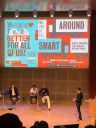
Imagine a future Amsterdam where personal combustion engine vehicles are a thing of the past – resigned to an exhibit in the Rijksmuseum. Laugh now, but we may be closer to that possible future than you think. WeMakeThe.City recently held a discussion on the future of travel in and around the center of Amsterdam. The prognosis? Mobility-as-a-Service (MaaS) is a way for the city to manage growth and congestion while improving the quality of life of residents. A recap of the event by our special reporter Derrek Clarke.
MaaS transit consists of both private and public transportation solutions that are consumed as a service through a single interface. Instead of personal vehicles, travellers will have their choice of shared electric cars, bicycles, scooters, trams, trains and ferries – whichever mode of transportation fits their needs.
“Multi-modal (MaaS) transit is the future of urban travel and its coming to Amsterdam.” – Miguel Gamino Jr., Head of Global Cities at Mastercard
Amsterdammers will not be forced to give up their cars immediately, but incentives are already being put in place to drive change. This summer the city has already embarked on a plan to replace around 11,000 streetside vehicle parking spaces in the urban center with more bike racks. In addition, smarter infrastructure management practices have also been piloted around the ArenAPoort area. Here drivers and public transport users are provided with transport information such as wait times, the location of available parking and payment instructions – all of which have led to 75% lower congestion in the area.
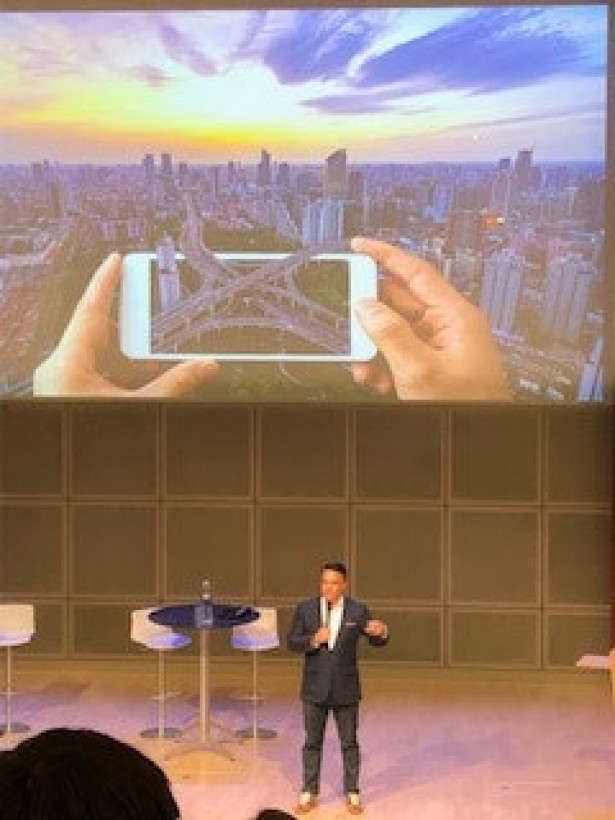
Sounds great doesn’t it? Less congestion and traffic frustrations, fewer accidents, lower costs, safer travel. Getting there won’t be easy through. As Robert Jan ter Kuile, the Strategy Officer for GVB states, “This will entail accommodating different travel needs from disparate destinations such as from rural locations to urban locations or vice versa”. This transition will require the formation of more public-private partnerships to be successful. Government agencies will need to partner with fast moving private companies to create the infrastructure to support a MaaS transit vision of the future that finds the right balance between different modes of transportation.
Envisioning Transportation Equality For All
Finding the right balance of technology to support MaaS transportation will not be easy. For example, replacing all personal vehicles or public transportation with ridesharing may create more problems than is solved. As Oded Cats, an Associate Professor at TU Delft and AMS Institute points out, “…with ridesharing, as demand increases travel time will also increase as riders have to wait longer for a car to arrive. This will lead to increased ride cancellations as people become increasingly frustrated with extended waiting times”. However, having more rideshares available will also mean that another, potentially available car will not be far away.
Increasing the number of combustion engine cars constantly roaming around Amsterdam in search of passengers will not help air quality. This is where alternative fuel vehicles such as electric or the often-hyped hydrogen fuelled cars will come into play. To be successful, service providers will need more infrastructure than what is currently provided. The current limited number of EV charging infrastructure for cars and other vehicles is hampering growth in the use of electric vehicles. Charging locations have to be more visible and frequently located to instil confidence in users that if a car is running low you won’t be stranded in the middle of a journey. Hydrogen fuelled cars are still quite far off into the future.
Investing in EV charging infrastructure will also benefit the adoption of electric buses, trams and the transition to more energy efficient buildings. Yes, you read that right, EV charging infrastructure can help make buildings more energy efficient. This is accomplished through the use of bi-directional charging. In this way, the EV charging infrastructure can act as batteries for buildings – feeding electricity back when the price is high and vehicle batteries are already fully charged. Not only will this reduce energy costs, but it will also alleviate pressure on ageing utility grids. This is a step towards being a smart city through smarter infrastructure. As Vivek Makhija, Head of E-Mobility and Advanced Biofuels at Royal Dutch Shell stated, “We will need a mosaic of energy futures moving forward (to transition to a smarter urban future)”.
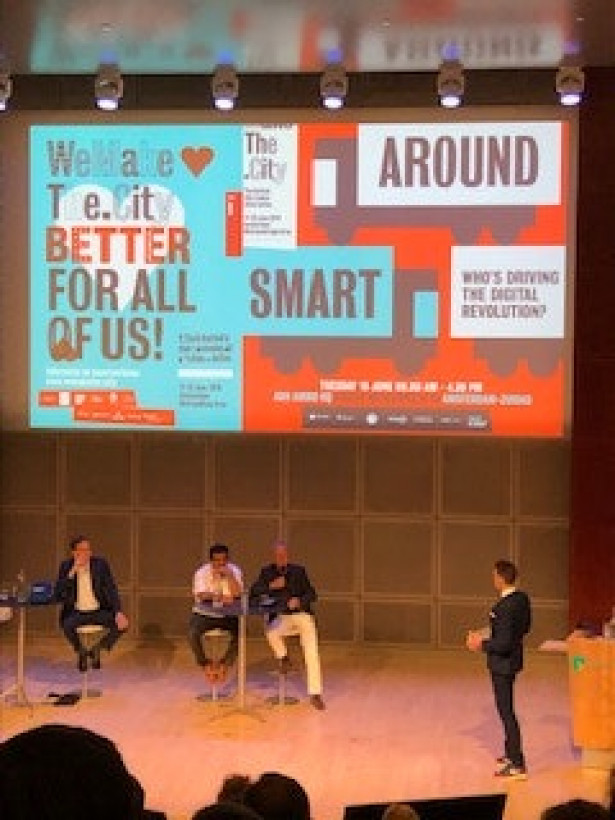
The Future Is Uncertain Until We Decide To Create It
In the end, it is up to the citizens of Amsterdam to effect change. Some 40 years ago, the people of Amsterdam, neighbourhood by neighbourhood decided to become a more bike centric society. This transition is still happening today. The same effort will be required to transition to a MaaS transit society. To get there though, we will have to answer some tough questions about ourselves. Franka Couzy, Head of Sector Research at ABN AMRO voiced some of these questions such as “Am I ready to give up my car?”, “Is there a good replacement system I can rely upon?”, “Is my expensive parking space going to become a stranded asset?”, and “How much privacy am I willing to give up for personalized transportation services?”.
To be successful, the development of a MaaS transit system is going to require the active participation of private enterprise, government agencies and private citizens working alongside each other. This is the next evolution of the problem of the commons – where we all have to pitch in to protect and support our collective environment. It’s time for change, are you ready?
Text and photos: Derrek Clarke
Amsterdam InChange,
Connector of opportunities
at Amsterdam InChange,
posted
Event report: Will the cities of the future be car-free?
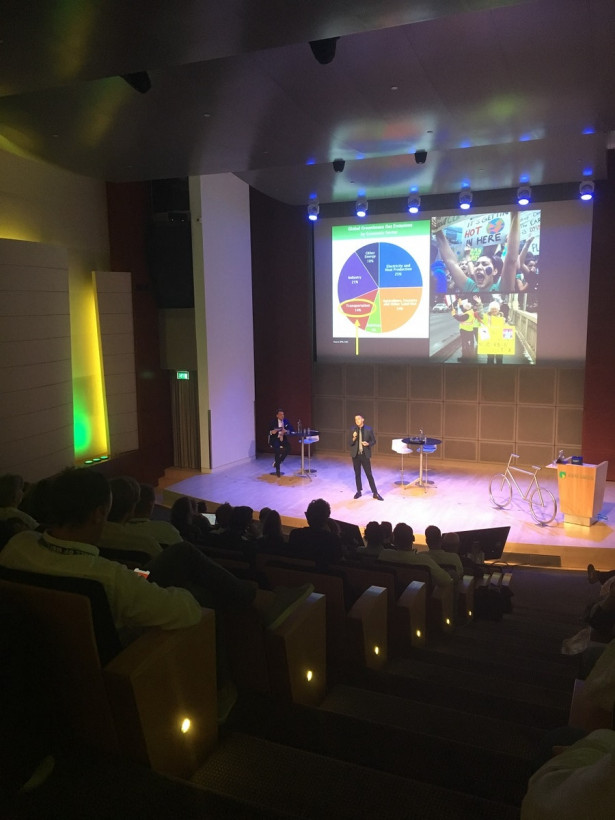
Climate change, air pollution and lack of space - issues to a lot of cities. Is the solution to become car-free? The third day of the urban festival WeMakeThe.City festival saw experts from industry, academia and government come together to discuss the future of urban mobility during the “Autoluwe Stad” conference. Read the report, written by Ellie Roy.
Rethinking the role of cars
Rogier Elshout, moderator of the conference, started by asking the audience: “What should the city of Amsterdam aim to achieve by 2040? Should the city become emission-free, completely car-free or should the government just leave things as they are?” The audience clearly favoured a city in which pollution was avoided and the role of cars reduced. Like many other cities worldwide, Amsterdam has already set a concrete goal for the future: by 2030 the city will be emission-free for all forms of transportation. In order to make this happen, sustainable alternatives to the car need to play a larger role.
For the last decades cities, including Amsterdam, have focused on a car-centred design. Max Hirsh, research professor at the University of Hong Kong, explained how this poses a challenge: “For many people not having a car would lead to a reduction in quality of life. This issue is particularly relevant for those living on the outskirts of the city where the public transport network is more limited. This results in a phenomenon referred to as the “last mile problem” - the challenge of connecting transportation hubs with people’s final destination. While this problem persists, cars will remain the dominant mode of transportation.”
For improvements to be made, Max believes that the relationship between the car and the city needs to be reconsidered fundamentally. In order to do this “we need to start by looking at people’s desires and needs - rather than telling people how they should live. We should look at how they are living and ask them if they necessarily need a car to achieve these different tasks.” In his opinion, providing cheaper and more convenient alternatives is the solution to changing people’s behaviour. Innovations in e-commerce and logistics could play an important role. For instance, home delivery services and airport luggage collection would provide people with an alternative to transporting heavy items themselves, therefore reducing the reliance on the car.
Making car-free make sense
The City of Amsterdam is already taking steps towards reducing car dependence by investigating and implementing cleaner and smarter mobility options. Sharon Dijksma, Deputy Mayor for Traffic, Transport, Water and Air Quality, explained the city’s plans for the coming years. “We want more space and better air quality, therefore it is necessary to reduce the space for cars in the city in favour of cyclists, pedestrians and other modes of transport. In order to achieve this, a variety of new concepts are being tested. For example, in many neighbourhoods “eBuurthubs” will be developed together with residents. These are places where different types of sustainable mobility will be clustered, allowing alternatives to private car ownership (such as e-bikes and shared cars) to become more accessible.”
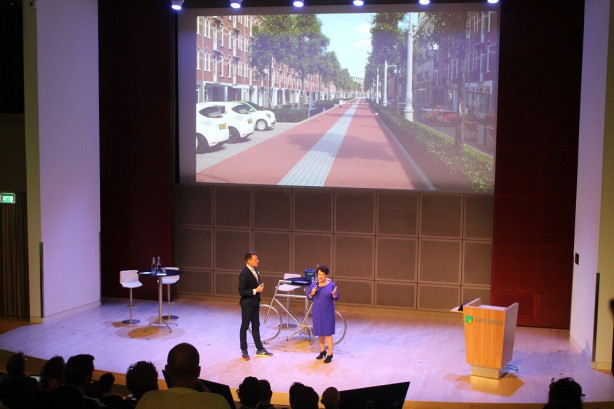
In addition, the city has conducted research into the feasibility of becoming less car dependent. A so-called “travel test” was conducted, in which 70 people handed in their car keys in exchange for a budget to spend on alternative modes of transport. Diederik Basta from Amsterdam’s CTO Office and Marije van Gent, researcher at the Hogeschool van Amsterdam, discussed the outcomes of this experiment. Diederik explained that one of the most surprising conclusions was that none of the participants finished the 500 euro budget. Furthermore, one third of the participants decided to give up their car after the experiment. Marije pointed out that most people participating in the study were already considering going car-free. However, the results illustrate that being less car dependent is definitely a feasible option.
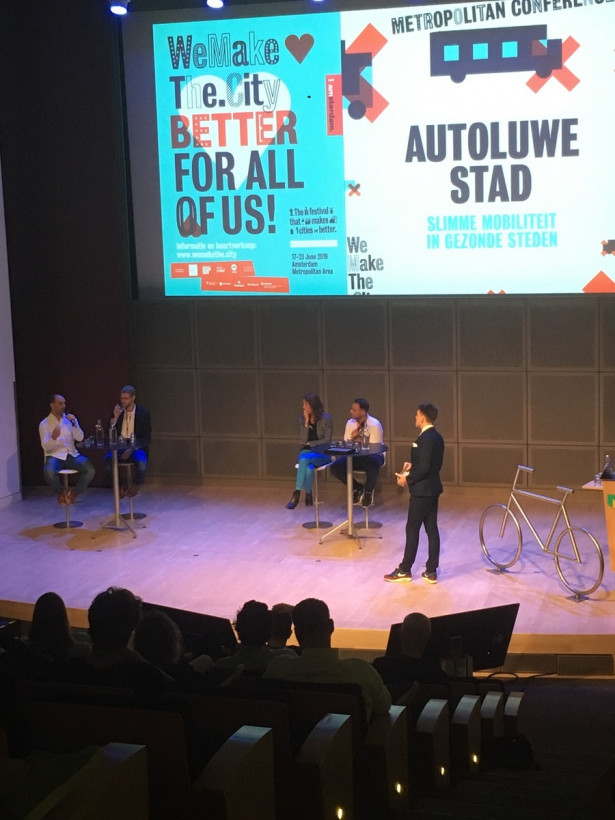
In many cities worldwide, Uber has become one of the companies helping to make car-free alternatives become more feasible. More than just a taxi company, Uber is expanding its services to include sustainable mobility options. Thijs Emondts, general manager of Uber Benelux, presented the company’s new vision. “Ultimately taxis and cars were just the start, the strategy is to become a platform for all forms of mobility”. Ride shares, e-bikes and public transport will all be incorporated into the platform. An entire journey could be made using one app, allowing sustainable alternatives to become easily accessible. This type of service could provide the city with many benefits. Sharon Dijksma was clear to emphasise the importance of policies to regulate new services, particularly in relation to data collection and privacy. “Anyone offering mobility services in the city also needs to be held accountable”.
Greener streets
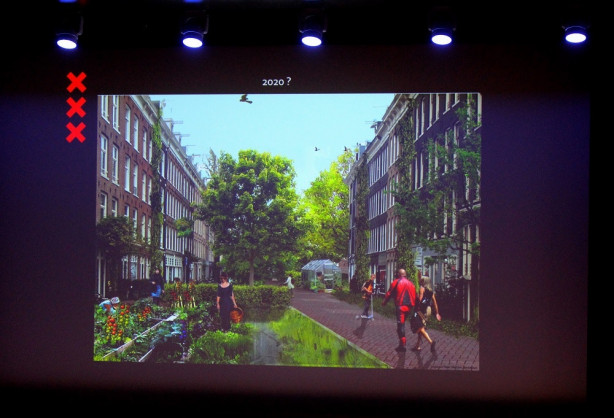
Of all of the initiatives presented during the conference, one of the most striking was the redevelopment of the Frans Halsbuurt, initiated by residents of the neighbourhood. The Frans Halsbuurt is an area in Amsterdam characterised by narrow streets and many pedestrians and cyclists. Residents put pressure on the local municipality to remove all parking spaces and redesign the public space to create a better living environment. Peter Ulle, senior designer for the project, explained how collaboration with the residents was made a priority and used to establish the starting points for the design. A rough sketch of what the area might look like in 2020: an impressive vision of green public space. It made the audience wonder: is this what the car-free city will look like...?
Text and photos: Ellie Roy
Lizann Tjon,
Program Manager Innovation
at City of Amsterdam,
posted
Start Smart Mobility Amsterdam 2019 - 2025
An accessible, liveable and less polluted city: this is what we’d like to achieve for residents, visitors and businesses in Amsterdam today and for future generations.
Smarter and cleaner mobility can help us realise these aims. As a city, we want to offer Amsterdammers, commuters and visitors alternatives to the present forms of mobility, providing a door-to-door solution and contributing to our aims. This includes shared electric transport, from cars to bikes, in ‘Neighbourhood eHubs’ (eBuurthubs) established in cooperation with local residents. That way, we can use clean modes of transport and create more space in the city by sharing. We can then use this extra space to improve liveability.
More info on www.amsterdam.nl/smartmobility
Amsterdam InChange,
Connector of opportunities
at Amsterdam InChange,
posted
And the winners are...

On 16-17 June we organised, together with the City of Amsterdam, AMS Institute and EIT Climate-KIC, a 24-hour non-stop pressure cooker event. 45 participants worked in 8 multi-disciplinary team to ideate, uncover insights and propose innovative solutions to the city's urban challenges.
The 24-hours Amsterdam City Challenge is one of the events that Amsterdam organises to stimulate their citizens to come up with bright and bold ideas for a sustainable future. The challenges of this event where about Mobility and the Energy Transition:
Mobility
- How can we organize the supply of fresh food and beverages in the city, in a more efficient manner?
- How can we improve management of the mobility flows to major tourist attractions more effectively, such as the Zandvoort beach on sunny days?
- How can we increase the safety of cyclists with respect to congestion on the bike paths and roads (i.e. electric bikes, cargo bikes, and regular bikes)?
Energy Transition
- Taking the Haparandadam as a point of inspiration, how can we install solar power in unusual places?
- How can we make data centers greener?
And the winners are...
Amsterdam City Challenge - Innovate the City in 24-hours
Of course every challenge has its winners. But the compliments go to all the participants that where awake for over 24 hours! It is quite a challenge to stay awake... But during this pressure cooker, all kinds of great ideas come alive. That is the great thing about this 24-hours event.
The winner of the Mobility Challenge is team Extra Mile. They came with the idea to use the infrastructure of the trams to deliver food and beverage supplies to the restaurants and bars in Amsterdam. In order to realise this, this team introduced 'De Vreet Tram' ('Vreet' means 'eating a lot' in Dutch).
The winner of the Energy Transition Challenge and the Tada-price is Switchport. This team developed a great idea to combine art with the construction of solar panels. They also wanted to make the use of the solar panel inclusive for the citizens.
Besides winning € 1,000 to work on their ideas furthermore, the teams also got the opportunity to present their ideas during WeMakeThe.City
Meital Itskovitch,
Business development manager
,
posted
Level Up Your Customer Experience Through Technology

We are thrilled to be hosting our first meetup in Amsterdam focusing on customer experience and technology.
Learn how to utilize technology to better shape your customer's journey.
Join us for Interesting content, refreshing drinks and tasty bites are on us! Monday June 24th, register here:
https://bit.ly/2Wu8QHJ
Stay up to date
Get notified about new updates, opportunities or events that match your interests.
Set up preferences

